

It is January 19th 2017 and Joaquín “El Chapo” Guzmán has just been extradited to the United States to face charges related to his running of the most powerful drug cartel in Mexico, the Sinaloa Cartel. The United States’ Drug Enforcement Administration, also known as the DEA, claims that this is a monumental victory that will be the beginning of the end for drug smuggling into America.
However, 6 years on the problem has only got worse. The illicit drug trade in the United States is now worth over $150 billion, nearly a quarter of the $652 billion that it rakes in worldwide annually. Mexican suppliers are responsible for most of the production of heroin and methamphetamines, with cocaine being largely produced in Colombia and transported into the U.S. by Mexican cartels. These Mexican drug trafficking organisations are transnational criminal networks that dominate both the importation and exportation of narcotics around the world. However, the biggest threat they behold is fentanyl. Alongside China, the Mexican cartels are the leading source of fentanyl in the world, a synthetic opioid 50 times stronger than heroin. This opioid can now be found in most recreational drugs unbeknownst to the user, which has led to an increase of 282% in overdoses related to its consumption.
The issue that the Mexican government faces as it attempts to tackle its countries drug trade is simply control. The cartels initially flourished during the 70-year rule of the Institutional Revolutionary Party, during which they bribed corrupt officials to gain access to distribution routes and protection. However, in 2000, a new political party came to power and the cartel’s dominance faltered. In response they ramped up their violence against the government in an attempt to re-establish their control. Since Mexico declared war on the cartels in 2006, there have been more than 360,000 drug-related homicides. This, in conjunction with the fact that the cartels use their vast profits to bribe government officials, politicians and the police, have allowed them to continue their operations. Internationally, they have only become more powerful and have shifted from acting as couriers for the infamous Colombian Medellín Cartelto becoming wholesalers of the product, and by 2008 they controlled 90% of the cocaine entering the United States. Use of these drugs has only skyrocketed and the attempts to counter the narcotics trade has made little to no progress in reducing demand, as Americans spent over $153 billion on illegal drugs in 2017.
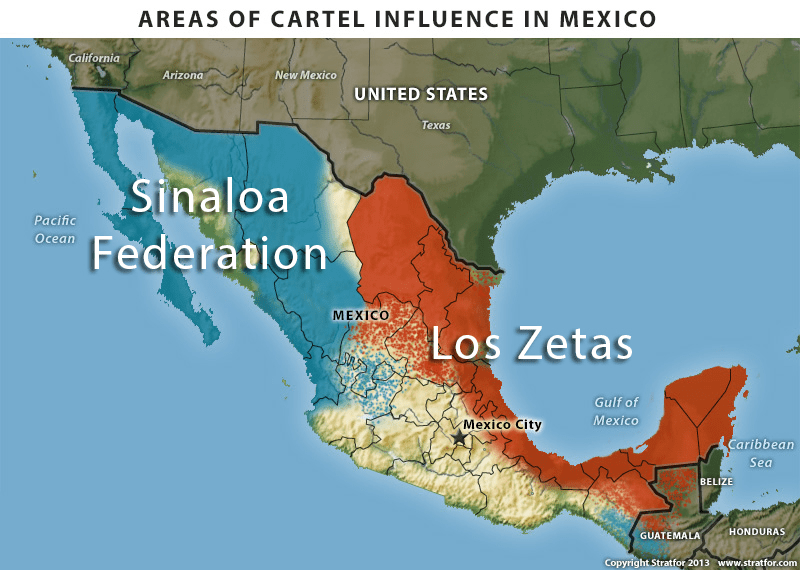
The Sinaloa cartel has strongholds in over half of the Mexican states and run operations in as many as 50 countries. Despite El Chapo’s extradition, it continues to be powerful, and is led by Ismael Zambada Garcia and El Chapo’s sons, known as “Los Chapitos”. The second most powerful gang is the Jalisco New Generation Cartel, which splintered from The Sinaloa cartel in 2010, and is the fastest growing cartel in Mexico. It now has operations in two-thirds of the country and is believed to be responsible for over one-third of the drugs entering the U.S. drug market. However, the most dangerous group is Los Zetas, which was once the enforcement arm of the Gulf cartel. They consist mainly of ex-Mexican special forces and are known for their use of specialized military tactics and brutality in conflicts.
Because of these incredibly powerful criminal organizations, Mexico has almost become a lawless state. Any attempts to reduce the power of these criminal organisations is met with retaliation in the form of killings and arson of government buildings. Such was the case earlier this year when Ovidio Guzmán-López, 32, alleged to be a leader of his father’s Sinaloa cartel, was captured in Culiacán. Gang members set up road blocks and set fire to hundreds of vehicles, which led to 10 soldiers being killed and a further 35 injured. The Mexican government’s response was to send 1,000 soldiers to Sinaloa in order to take control of the situation, although this was unsuccessful due to the level of corruption present among the Mexican armed forces.
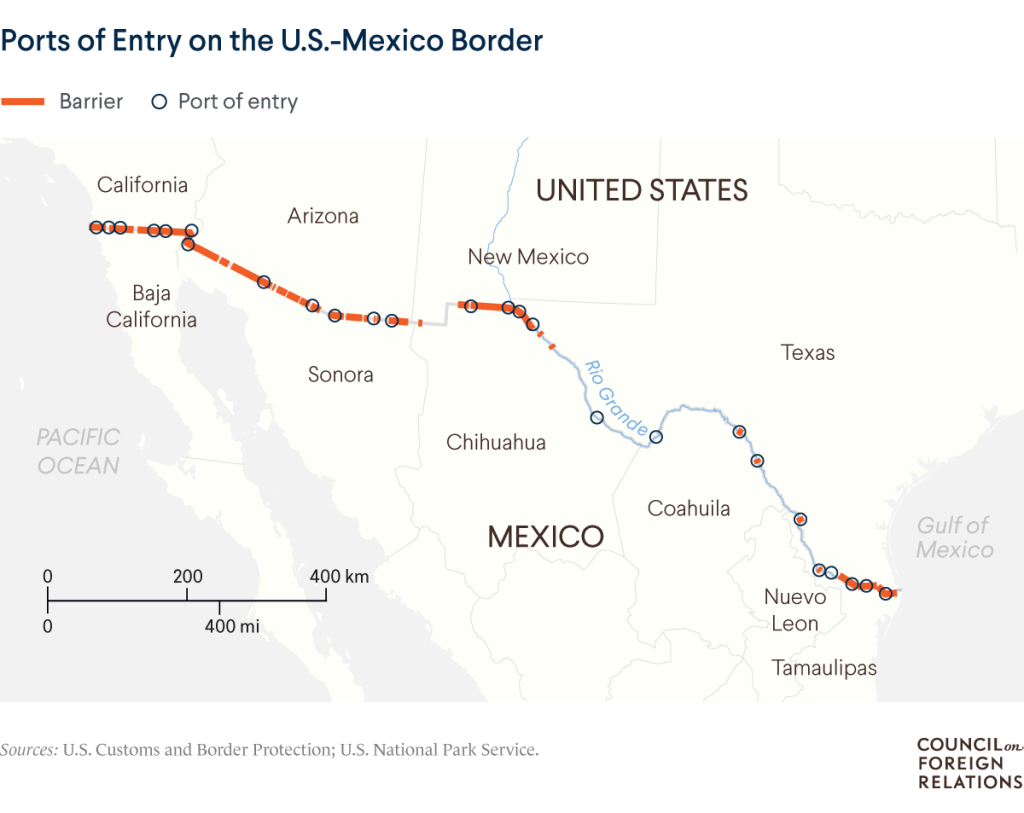
The US has been cooperating with Mexico on security and counternarcotic operations over the past decades. Recent efforts have been centred on the Merida Initiative, which has received more than 3 billion dollars in funding over the past 15 years. This has gone into surveillance software, military aircraft and the bolstering of the US-Mexico border. The Bush administration was mainly focused on providing security-related assistance, while Obama’s administration aimed to reform the Mexican judicial system in an attempt to reduce corruption. Trump decided to deploy thousands of troops to the border, which in turn led to Mexico deploying 25,000 National Guard members to tackle the drug trade occurring through its borders. However, this led to increased violence and only revitalised the cartels’ strength; they now found it easier to operate since fewer of their operations inside the country were being tackled.
Increased border security only made the drug trade a more attractive business venture for the Mexican cartels, and the street price of cocaine reached an all time high of $120 dollars a gram in the United States, the third highest in the world. Demand for the drug has not faltered, but instead increased exponentially over the decades. In fact, 2.4% of Americans aged 15-64 report taking the drug regularly, according to a report published by the United Nations Office on Drugs and Crime in 2016. This has also led to more violence and human right violations as traffickers are ready to take greater risks to transport such a lucrative product.
The socioeconomic crisis that the drug trade poses to the United States and the rest of the world doesn’t stop at the exploitation of workers and increased criminal activity. It includes a decrease in productivity and an increase in both healthcare and criminal justice costs worldwide. In the U.S. alone these reached a total of $193 billion dollars in 2007, a number that is likely to be much higher now with the increase in drug usage, particularly within the teenage population. The loss in productivity, which amounts to $120 billion, is mainly due to a lack of labour participation, premature deaths and incarceration.
This drug trade must be tackled, or the world risks facing a drug epidemic and a profound impact on the global economy. This will require a united effort across the Americas and in Europe, where 31% of the population are users of illicit substances. Educational initiatives could help to reduce consumption, as well as development initiatives in the areas where drugs are produced. However, a more controversial alternative would be legalising these substances, while imposing harsher prison sentences on those who distribute or produce them. This would significantly reduce prices and provide less of an incentive for criminal organisations to engage in the drug trade.
 etonomics.com