
Overview
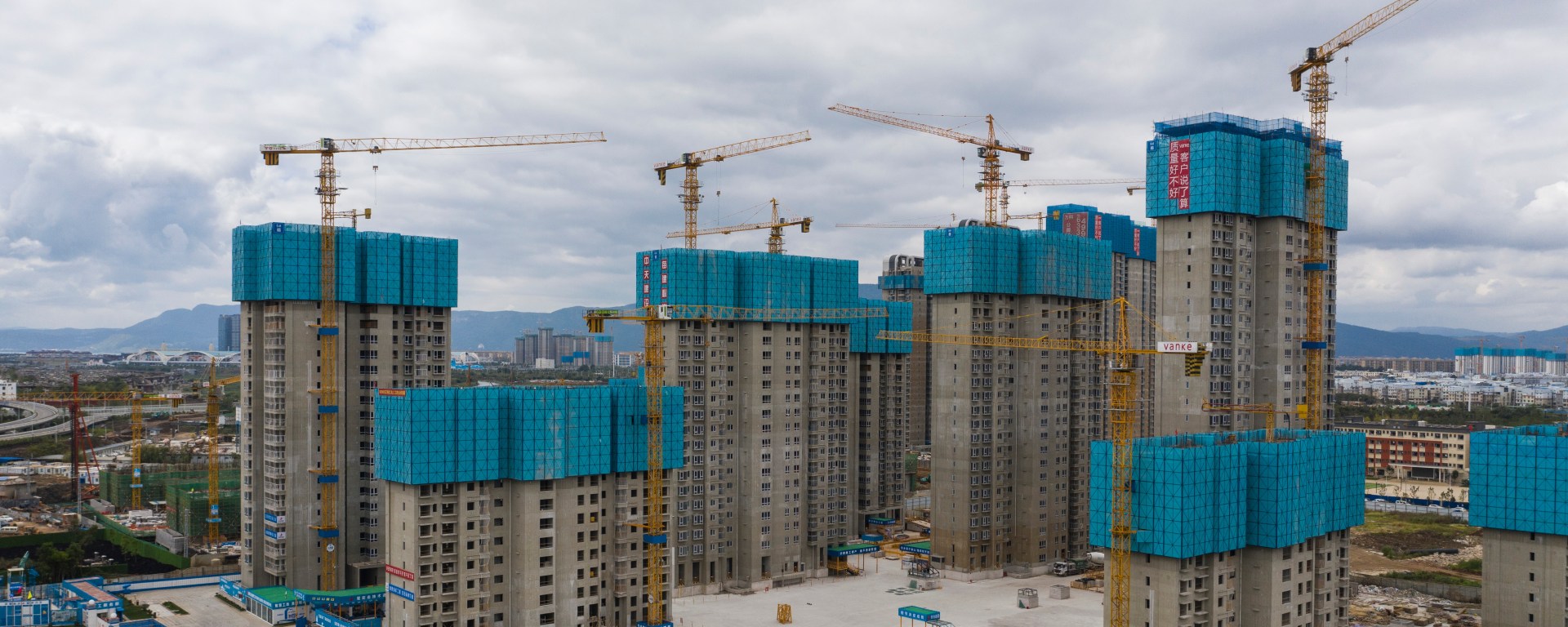
China’s economic boom over the last three decades has been well documented; its gross domestic product (GDP) grew at an average rate of 9% annually between 1989 and 2022 and is forecasted to overtake the American economy by 2035 according to Goldman Sachs. But economists frequently overlook a major vulnerability of the Chinese economy: its fragile real-estate industry. For decades, China’s economy has been dependent on an excessive population growth rate and rapid urbanisation which in turn fuelled the real estate boom. This growth of the real estate sector was simply unsustainable as it was largely driven by speculative investments, lax lending standards and excessive borrowing. This has led to an industry-wide debt crisis, affecting not only homeowners and developers but also foreign firms. The roots of this crisis can be traced back to August 2020, when the government enacted the “three red-lines” rule, which effectively prevented developers from over-borrowing from banks. As such, the industry was met with a severe cash crunch and developers have not been able to recover since.
Causes & Effects
Home ownership in China is considered to be a status symbol. More than 80% of Chinese households own their homes and 20% of urban households own multiple homes. This is largely due to the fact that the booming property sector has been seen as a safe investment for the Chinese middle class. Indeed, the savings rate at most Chinese banks fluctuates around just 2% ± 1. Furthermore, the Chinese stock market has proven to be extremely volatile. Hence, real estate is considered to be the best investment as property prices have increased significantly since the 1990s. In recent years, however, property prices have been stagnant. This can be attributed to China’s shrinking and ageing population – a knock-on effect of the one-child policy that Beijing imposed between 1979 and 2015. In addition, the government’s implementation of the zero-Covid policy (2020-22) caused property prices to plummet, leading to a widespread lack of faith in the real estate sector and thus a decline in demand for property. The lockdowns caused workers across the nation to be laid off and hindered consumer spending in the real estate sector as potential buyers were stopped from viewing homes. Moreover, strict lockdowns as part of the zero-Covid policy had an impact on consumer psyche. With many households in desperate need of liquidity in the midst of the pandemic, numerous homes were put up for sale albeit with far less demand. The Covid-induced real-estate crisis is not just a stand-alone event but instead hints at a looming predicament within the property market. While Covid-19 had a remarkable impact on demand, the rapidly shrinking population will cause demand to dwindle further. According to Bloomberg, 80% of the average Chinese household’s wealth is tied up in their property ownerships. When property prices fall, consumers spend less, and consequently the Chinese economy is dealt a blow.
The decline in the rate of Chinese urbanisation and property demand has led to Chinese developers being unable to repay loans. Gavekal Research (an independent macroeconomics research group) estimates that unpaid bills from private Chinese developers total $390 billion. In fact, more than 50 real estate developers have failed to make payments since 2020. One of China’s biggest real-estate developers, China Evergrande, defaulted on $300 billion of debt in 2021 before filing for U.S. bankruptcy in August 2023. This is significant as the property market accounts for roughly 20% of China’s GDP and is the single biggest contributor to its domestic economy. Accordingly, the crisis has resulted in economists downgrading their forecasts for Chinese economic growth in 2023 to just 5%.
Country Garden, China’s largest real estate developer, has particularly suffered from this debt meltdown as it missed $22.5 million in coupon payments on August 6th (2023) alone. Country Garden is renowned for its ambitious projects in China’s developing cities. If the sluggish rate that Country Garden was building homes in the first half of 2022 is sustained, at least 144,000 buyers will not receive homes they were promised by the end of 2023. This is significant as it demonstrates that the falling demand has caused supply to fall in tandem due to over-borrowing from development firms. Due to this over-leverage crisis, Country Garden has reported a loss of $7.6 billion in just the first six months of the year as its sales fell by 60% in July 2023 compared to the same period a year earlier. It is clear though that Country Garden’s financial woes will likely only aggravate, as the developer has a debt of $14.9 billion due within the next year but only has about $13.8 billion in cash as of June 2023. Instead of property prices and developers bouncing back from the effects of Covid-19, the crisis has only aggravated in recent months (thus showing that Covid was a precursor to this real estate calamity).
Government Intervention
The potential implications of this crisis are grave for Chinese housing development firms. The predicament could potentially lead to real estate supply chains collapsing. As developers have grown shorter on funds, suppliers have been paid less. Between 2021 and 2022, Country Garden’s transfers to engineering and construction firms fell from $44 billion to $26 billion. Most projections have this figure falling even further this year. While economists predict that government intervention will save the biggest contracting firms in order to prevent the property bubble from bursting, the vast majority of smaller engineering and construction companies will inevitably go out of business. But perhaps the most grave consequence of the property sector crisis is the threat to price stability. The country’s biggest developers (i.e. Country Garden, China Evergrande) will soon have no choice but to cut prices to generate sales. This will create competition and lead to real estate prices plummeting across the industry, thereby persuading people to delay property purchases in the hope that prices fall even further. The government has been reluctant to directly intervene in the real estate industry thus far. One potential response by the Chinese government could be to gradually lower interest rates to encourage people to spend in the property market again (this approach was popular amongst numerous OECD governments in the aftermath of the 2008 Global Financial Crisis). But with Country Garden and Evergrande on the brink of collapse, Beijing might have no choice but to step in with a stimulus package to save the property market (and the economy) from tanking. However, it is imperative to note that rescuing Country Garden or China Evergrande would make state officials obliged to issue numerous additional bail-outs, therefore setting an unsustainable precedent.
Global Implications
In July, S&P Global Ratings predicted that real estate prices would decline 30% in 2023. Since Chinese property developers do not hold much debt overseas, the Chinese property crisis will likely not trigger a global financial recession akin to the one seen in 2008, which was sparked by the collapse of Lehman Brothers in the United States. Indeed, less than 5% of Chinese bonds and equities are held by those overseas. With that said, a slowdown in China’s economic growth will nevertheless have a ripple effect on the global economy. The World Economic Forum has estimated that for every 1 percentage-point decline in China’s GDP, global GDP contracts by 0.3 percent. Furthermore, a 2019 study by the United States Federal Reserve projected that an 8.5% fall in China’s economy would result in a 3.25% decline in advanced economies and a nearly 6% drop in emerging economies. In short, a potential Chinese real estate crisis sector collapse would not only induce a Chinese economic downturn, but it would also have a substantial detrimental impact on foreign economies.
 etonomics.com