
Overview
Between 1975 and 1990, one of the bloodiest civil wars in history took place in Lebanon which left more than 120,000 people dead. The war, fought between the Maronites (Christians), Sunni muslims and Shia muslims had no clear winner after fifteen years. This stalemate led to the current Lebanese government set-up where each religious group has parliamentary representation and parties are formed on religious lines. These entrenched religious divisions have led to endemic corruption and perpetual political turmoil which has ultimately caused their economy to collapse.
Post-War Boom
The immediate aftermath of the civil war was marked by unprecedented economic growth in the 1990s. Between 1990 and 2000, Lebanon’s GDP grew from $2.8 billion and $17.3 billion (500%). While this growth in part was fuelled by foreign investment, 60% of Lebanon’s GDP in the 1990s came from trade, tourism and financial services. With its service-centric economy, Lebanon was highly reliant on imports of basic commodities such as oil and food. Given that the vast majority of global trade transactions are conducted in dollars, the government decided to peg the local currency (the Lebanese lira) to the US dollar at a fixed rate in 1997. This made the historically volatile lira stronger and made Lebanon more appealing for foreign investment due to the new economic stability that the country offered investors. Between 1992 and 1998, foreign exchange reserves jumped to $6 billion from $1.4 billion. Moreover, the stock market reopened in 1996 which enabled middle class incomes to exponentially increase. The increase in foreign investment was also driven by the risk-averse and conservative nature of local banks. Banking stability during the 1990s and 2000s even earned Lebanon the nickname “the Switzerland of the East” by many economists. Indeed, the conservative and regulatory approach of the Lebanese financial system left Lebanese banks largely unscathed by the Global Financial Crisis of 2008. While other regional economies such as the UAE (5.2% contraction) and Kuwait (7.1% contraction) were hit hard by the recession, the Lebanese economy actually grew quicker during the crisis (9.5% expansion).
Corruption, Collapse, Conflict & Catastrophe
The ultimate aim for the government was to raise enough capital in central bank reserves in order to fund ambitious infrastructure projects. This was achieved through the central bank offering exceptionally high interest rates to commercial banks (normally around 10%) at a time when most western banks offered little to no return. These high interest rates should not have been a problem given that the funds were going to be used on projects in order to boost output and economic growth. However, while foreign investment increased during the late 1990s and early 2000s, political corruption stemming from religious divisions meant that much of this capital went to individual politicians rather than being invested into infrastructure and other services. It is estimated that banks have smuggled more than $6 billion since the turn of the millennium. With funds going to corrupt individuals instead of being invested in infrastructure, Lebanon bore witness to several electricity outages in the 2000s and 2010s. Indeed, a 2009 World Bank report highlighted that no new power generation capacity had been added since two combined cycle plants were installed in the early 1990s (with all other cycle plants dating back to the pre-war era), thereby demonstrating how commercial bank investment was not effectively used to upgrade basic utilities such as power.
Lebanon’s fragile social and political structure was further stressed by the 2011 conflict in neighbouring Syria. In the years following the outbreak of conflict, Lebanon accepted more than 1.5 million displaced Syrians (thus increasing Lebanon’s population by a whopping 30%). The Syrian conflict was part of the larger 2011 Arab Spring. This was a series of uprisings and armed rebellions which plagued the region with economic instability and political upheaval. The conflict reduced confidence in the region for investors, which consequently led to foreign investment into Lebanon substantially decreasing. With foreign funds drying up and with no other means of paying back debt owed to commercial banks, the government was left with no choice but to take on more debt. This debt burden spiralled and by 2019 Lebanon’s debt-to-GDP ratio had ballooned to 170% (only topped by Venezuela, Sudan, Japan and Greece). With the government effectively forced to default on debt, unemployment and inflation started to skyrocket out of control. In fact, the country has lost more than 20% of its population since 2018 largely due to emigration as the situation in the country has become so dire.
The 2019 economic disorder was exacerbated by the pandemic in the following years, with real GDP contracting by 20% in 2020 alone. Lockdowns imposed globally had huge impacts on supply chains and, with the country being a net-importer, hyperinflation soared to unprecedented levels. Indeed, annual inflation has been above 100% since July 2020. With consumer confidence decreasing, citizens began to exchange their Lebanese liras for dollars. This caused the exchange rate to plummet, rendering the local currency practically worthless as the lira has lost 98% of its value since 2019. Whilst hyperinflation has reached record levels, the minimum wage has not increased since 2017 which has led to widespread civil unrest and mass emigration among the working class.
The pandemic, however, was not the nail in the coffin for the Lebanese economy. On August 4th, 2020, a warehouse in the Beirut port area containing 2700 tonnes of ammonium nitrate exploded. The explosion killed more than 200, injured more than 7000, and left 3000 homeless. Furthermore, the explosion resulted in $15 billion in property damage and destroyed the port responsible for 70% of Lebanon’s imports. This consequently increased import costs (and inflation) even further, thus adding to the economic woes of the nation. Hassan Diab, the prime minister at the time of explosion, himself admitted that the explosion was “the result of endemic corruption bigger than the state itself”. In the months following the explosion, unemployment escalated to 30% and GDP contracted by more than 7% in 2021 at a time when their neighbours were bouncing back economically from the days of the pandemic.
Conclusion
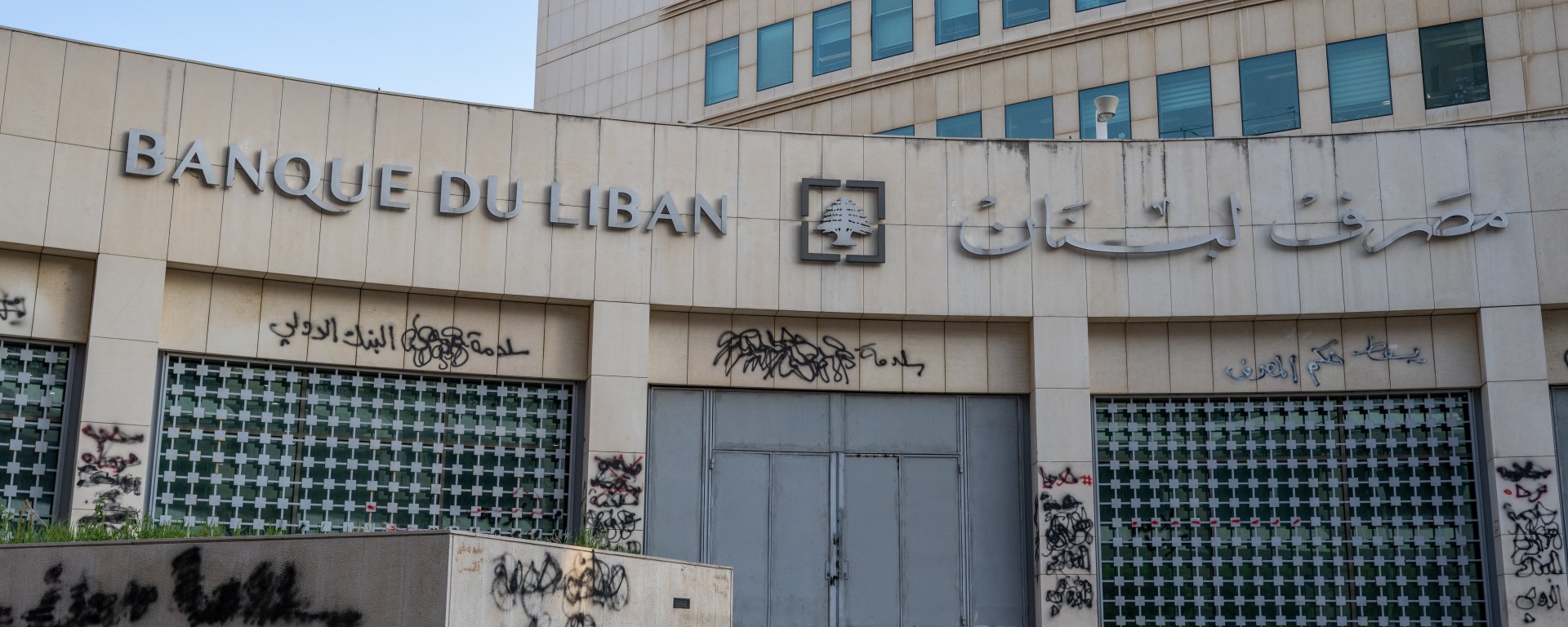
Lebanon’s federally orchestrated ponzi scheme has cost the nation dearly. The central bank’s over-leveraging quandaries has resulted in citizens and investors being robbed of their deposits. Furthermore, foreign funds meant for infrastructure projects have instead been directed to certain politicians, the result of which has arguably hindered potential economic growth. Regional tensions, most notably the 2011 Syrian conflict and the subsequent Arab Spring has effectively made Lebanon a refuge for those in war-torn areas. This, coupled with the fact that educated Lebanese citizens have left the country in search of job security and political stability abroad, has created an unskilled surplus which the country will now have to deal with in order to once again position themselves as a regional economic power. The October 2023 Israel-Palestine conflict could aggravate this increase the country’s unskilled surplus even further, as Lebanon has been the most popular foreign destination for Palestinian refugees seeking asylum abroad. One avenue which Lebanon’s government could explore to stimulate economic growth is through tapping into the country’s natural gas reserves, akin to how their gulf neighbours have done for decades. Even if this were to happen though, insurmountable religious differences have proven to be a sound breeding ground for political corruption. Thus, as long as Lebanon is governed and facilitated on the lines of religion, the country may never be able to realise its full economic potential.
 etonomics.com