
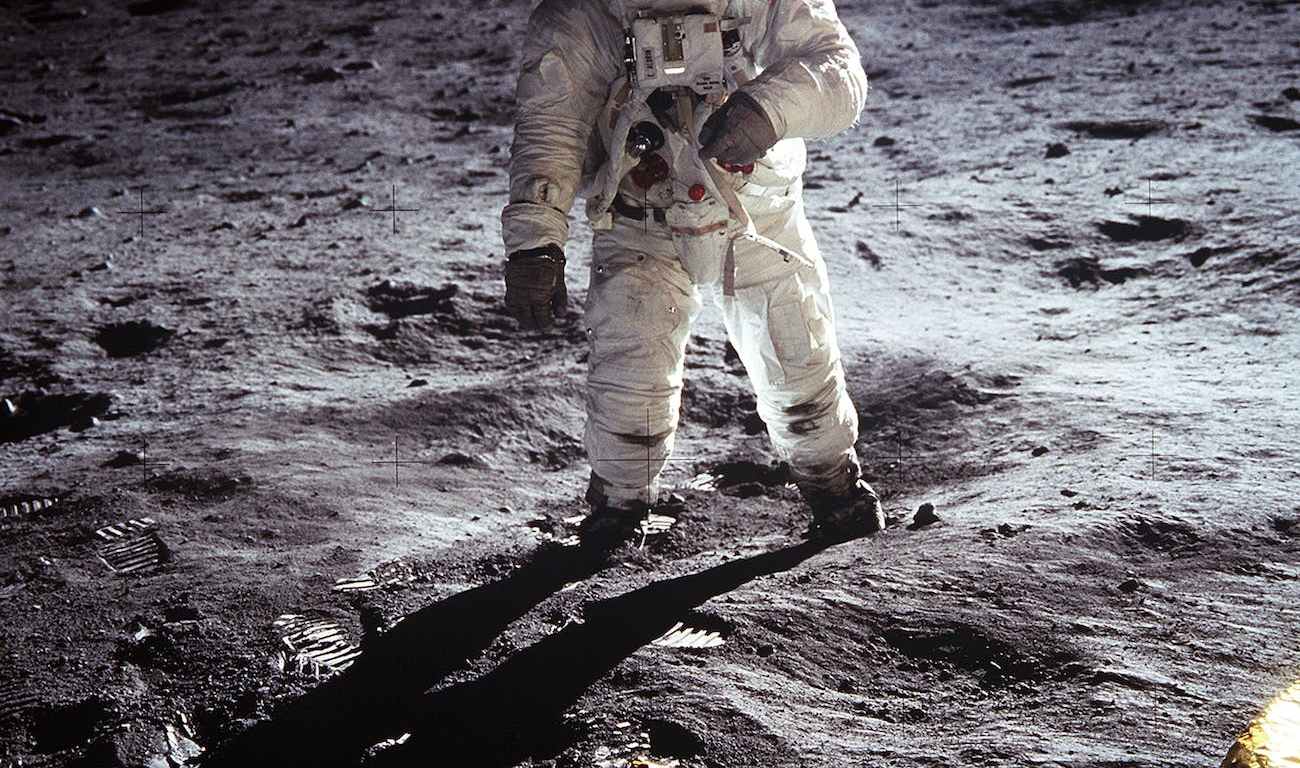
“We choose to go to the Moon in this decade and do the other things, not because they are easy, but because they are hard”.
Those were the words of John F Kennedy in 1962 at the dawn of the Space Race. In the previous year, the USSR had shocked the world by sending the first man into space. Uncle Sam was worried that his dominance was being challenged, at perhaps the height of the Cold War tensions. Indeed, only a month later was the Cuban Missile Crisis. With this speech, it became clear that the Cold War would not be confined to Earth. It would extend into the most impenetrable of frontiers: space.
We often view the space race as a thing of the past. Yet, a similar phenomenon may play out in 2023. Though its participants have changed, a second space race seems to be on the cards decades after the first; a race between China and America, with satellites at its centre. The Second Space Race is far from a hypothetical future event, but is playing out as we speak. Its results will perhaps define whether the 21st century heralds a continuation of American hegemony, or a new era of Chinese dominance.
One key aspect of this new race relates to satellites. The role of satellites in land conflicts has already shown its importance, highlighted by China’s concern about Starlink. Starlink is a large scale constellation of satellites, administered by SpaceX, which provides high bandwidth internet. Aside from giving the individual high speed internet access, it has the potential to reshape international warfare by offering a form of communication which is both less vulnerable to disruption and able to broadcast scenes of battle worldwide. This has already happened in Ukraine, and China is especially concerned that it may play out in Taiwan soon. Should China invade Taiwan in the near future, the West would be helpless to intervene if Taiwan were to be isolated from outside communication. However, Starlink offers a possible method for Taiwan to nullify this concern, and increase the security of its communications defences. Thus, satellites have a key role in land based conflict. Nevertheless, they may demonstrate even greater importance in space.
Satellites offer the opportunity to monopolise areas of space. China fears that the US is using Starlink to do so. Space offers a yet untapped frontier bursting with potential for economic growth from emerging industries such as asteroid mining, internet and e-commerce. For example, in 2019, China calculated that lunar resources could offer it 10 trillion dollars per annum by 2050. In other words, China can expect the equivalent of half America’s GDP every year by 2050 from a single region of the moon.
The politics of space will now affect the politics of Earth. At this moment it is uncertain how the space race will affect warfare as we know it. Satellites could be used for missile early warning and detection systems. Countries could be able to co-ordinate attacks not only from ground, air and sea, but from space and cyberspace too. Thus, whoever can monopolise space will be able to exert vast influence on Earth, both economically and militarily.
China has recognised this. It set up the People’s Liberation Army Strategic Support Force and has made plans to enter cislunar space (the region between the Earth and the Moon) by 2049. Russia has caught on too, rapidly accelerating its space programs through projects such as orbital and kinetic ASATs (Anti- Satellite Weapons), jamming signals, and RPOs (Rendezvous and Proximity Operations – manoeuvres where two space craft enter the same orbit). Both China and Russia are looking into a nuclear powered spacecraft, which could enable deep space travel. The outcome of the first space race enabled the US to dictate the latter half of the 20th century with its superior technology and claim a victory in the name of democracy. However, if China and Russia win the second space race, access to space may be very different, and could be restricted to those countries and their allies.
The US has been slower than China to mobilise its space programs. It has a slim edge in technology, primarily due to private industry spearheaded by SpaceX and its technology, such as reusable rockets. However, China is not far behind, having tested a nuclear capable hypersonic glide vehicle able to fly through low orbit space in 2021. The stakes are potentially higher than in the 1960s, and the US will need all the allies it can get if it is to prevail this time. Therefore in 2020, it signed the Artemis Accords with its allies to promote international co-operation in space. The Accords attempt to regulate the space economy, from mining the Moon and space warfare to staking claim to whole planets entirely. It did not include Russia or China, who in turn refused to support it, leading many to question whether “co-operation” was merely the continued promotion of American interests. It seems political relations in space follow those on Earth. Thus, for either side to win in space, they need as many allies as possible on the ground.
For this reason, China’s Belt and Road Initiative (BRI), which boasts 151 countries, 75% of the world population, and over half the world’s GDP, is key. Much like the US’s post-war Marshall Plan, China recognises that the more countries that rely on it, the better position it will hold in world politics. The Spatial Information Corridor has extended the BRI to space, giving participating countries access to satellites and space launch capabilities.
Both sides are gathering allies. The Artemis Accords and the Spatial Information Corridor essentially strive for the same thing: attempting to court the Middle Powers. Countries such as the UK, India and Russia will provide a huge advantage to each superpower. Whichever side provides the most attractive economic outcome to the Middle Powers will prevail. This is particularly shown in the US and China’s attempts to gain allies in Africa, motivated by rich mineral deposits found there. Materials such as cobalt, copper, and lithium will provide the edge in research and development of new technologies for space.
However, without cooperation, the danger of space based warfare and conflict rises. With so many planned launches of satellites, the US and China, who have not met since 2017, risk collisions. The first Space Race made space a theatre of politics. The second risks space becoming a theatre of war.
 etonomics.com
very insightful article. thank you
LikeLike