
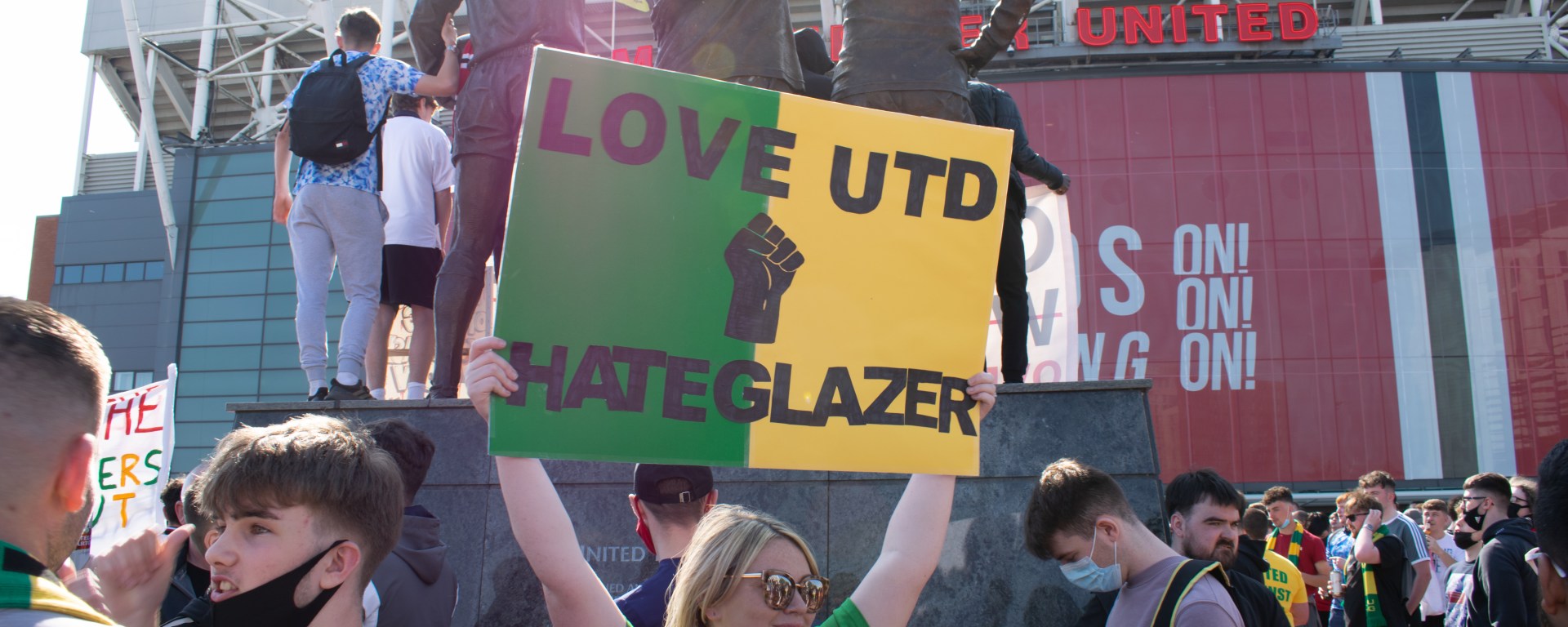
In November 2022 the Glazers finally announced the potential sale of Manchester United Football Club. A year later, has much changed?
What is the issue?
The Glazer family bought Manchester United Football Club in 2005 for £790m. The club is now valued at approximately £4.8bn, with the family having profited greatly by paying themselves dividends worth a whopping ~£20m per year from 2015-2022, the only Premier League club to do so. This has infuriated United fans as the money could have been spent on improving the club itself. The once breath taking Old Trafford has now deteriorated almost completely and the training facilities are outdated. Not only does this affect the fans, but it also reduces the revenue that the club could make. For example, if the club was to renovate and expand the capacity of Old Trafford, then the club could increase its income from having more tickets on sale. Further, they could raise the prices of the tickets as the experience of watching the game would be better as the quality of the stadium has increased. Secondly, if the club was to invest in better players, the team would have a higher chance of going deep into competitions and winning trophies. These outcomes normally come with hefty sums of money as a reward. With a better squad offering a higher quality of football, there would be more demand for tickets – this allows the club to raise their prices and still sell out the stadium. Therefore, these investments could have increased the revenue of the club, thus increasing its worth.
Another reason to why the Glazers are so detrimental to the club is that the money to buy the club was raised from a mixture of loans and other forms of debt. The Glazers tied this debt to the club and refused to pay it all back, leading to the club now owing approximately £535m. It is unsurprising that the Glazers are seen as tyrants who don’t share the same passion for the club as the fans.
Why has it been so hard to get rid of the Glazers?
Manchester United is listed on the New York Stock Exchange, and the club’s ownership is decided by the voting powers of the shareholders. However, what makes the Glazers so hard to buy out is the shareholder structure: A shares with 1 vote each, and B shares with 10 votes each. Although the A shares (available to buy on the market) make up 25% of the total number of shares, they only hold 3% voting power. On the other hand, the B shares are primarily owned by the Glazers (69%), which gives them the majority of votes and therefore the ability to control Manchester United. They can make decisions such as who to appoint for important senior roles, like Sporting Director, what parts of the club to invest in, and they can control which players the club buys and sells, without any other shareholders having a say. This is all because of the power of their B shares. Furthermore, when the B shares are sold, they are automatically transferred into A shares. This means that the value of the Glazer’s shares would diminish drastically if they were sold to someone else.
Buying Manchester United isn’t an attractive deal to strike because buying all of the Glazers’ B shares won’t give the buyer the same level of control that the Glazers currently have; they must also buy many A shares, which brings a lot of added cost. One way to attract more interest is if the Glazers change the club’s policies to allow B shares to remain as B shares when transferred, preserving their voting powers. However, this hasn’t happened in the past as they were never looking to sell the club.
Future Ownership
After finally announcing they were open to offers, two major bids for the club came in; Sheikh Jassim and Sir Jim Ratcliffe. Sheikh Jassim, the more popular of the two, reportedly bid 5 times for 100% ownership, with the last believed to be between the region of $6bn and $6.5bn. His offer included paying off all of the club’s debt and he also promised investment into the infrastructure and the playing squad of the club. However, frustrated with the Glazers’ greed when they asked for an even higher offer, he recently decided to pull out of the race in October of this year, leaving Sir Jim Ratcliffe as the sole option for new ownership.
Ratcliffe’s deal is entirely different to the complete takeover option; he offers partial ownership and more flexible terms. His bids have been changed from 69% to the current offer of 25%, with the possibility to eventually become the majority owner. He proposes that he controls the sporting side, and the Glazers continue to run the commercial side of the club, which the Glazers have accepted. Some small steps were initially taken towards the deal, including Richard Arnold, the now ex-CEO of Manchester United, stepping down from his role. Since then, on the 24th of December, the club announced that the deal had been made between the Glazers and Ratcliffe. Although this is good news for Manchester United fans, the Glazers remain majority owners.
The future of Manchester United
Even if Sir Jim Ratcliffe eventually becomes the majority owner of Manchester United, will he be better than the Glazers?
Ratcliffe’s sporting resume is pretty poor; in 2017 he bought Swiss team Lausanne, which got relegated soon after his arrival. More recently, in 2019, he bought French football club Nice which has consistently fallen short of its target to play champions league football. He also bought Team Sky (now rebranded to Team INEOS) who were best cycling team in the world. They have since lost their dominance and haven’t achieved anything of particular significance.
Whilst Ratcliffe’s record is quite abysmal, he has access to huge funds with an estimated net worth of $19.6bn. He could be more lenient with investing funds to improve the playing squad, something the Glazers were reluctant to do. Furthermore, Ratcliffe is gunning for an upheaval of the sporting side of the club; he has already identified Paul Mitchell to be the new sporting director, an expert in this area. Therefore, with Ratcliffe and his team at the wheel, there could be an improvement in identifying top footballing talents, something the Glazers have been quite awful at. Ratcliffe will almost certainly be an improvement to the club.
The future looks better for Manchester United. However, there are no guarantees for United supporters that he will eventually become the majority owner and get rid of the Glazers.
The effects of this process
Since the Glazers stated that they were willing to sell, the share prices of the club have fluctuated massively. Prior to their announcement, the price was $13.03 per share which then rose to $21.21 the next day, a 62.8% increase. When the news about an offer from Sheikh Jassim was leaked, share prices rose again from $23.60 to $27.34. Since then, prices have been gradually falling, but they are still much higher than the $13.03 before the Glazers’ announcement. This has been good news for the Glazers as the value of the club has gone up, which has allowed them to raise the asking price.
This saga has set a precedent for other Premier League clubs; it has shown how much of an impact a club’s owner can have and shows that owners don’t need to be in a rush to accept deals. Furthermore, the way the Glazers have valued the club will change the way that other owners will too in future sales. The material worth of Manchester United has been valued at approximately £4.6bn. However, the Glazers have unorthodoxly added an incredibly large sum of money to incorporate the potential value of the club in the future; they value it at over £5.5bn. This will encourage other football club owners to raise the price of their club considerably in a sale, as in the past, such huge amounts haven’t been added on top of the value of clubs. For example, Chelsea was sold for £2.5bn, which would be seen as a low price using the Glazers’ method.
Therefore, the potential sale of Manchester United has impacted fans, shareholders and even all football clubs around the world.
 etonomics.com