
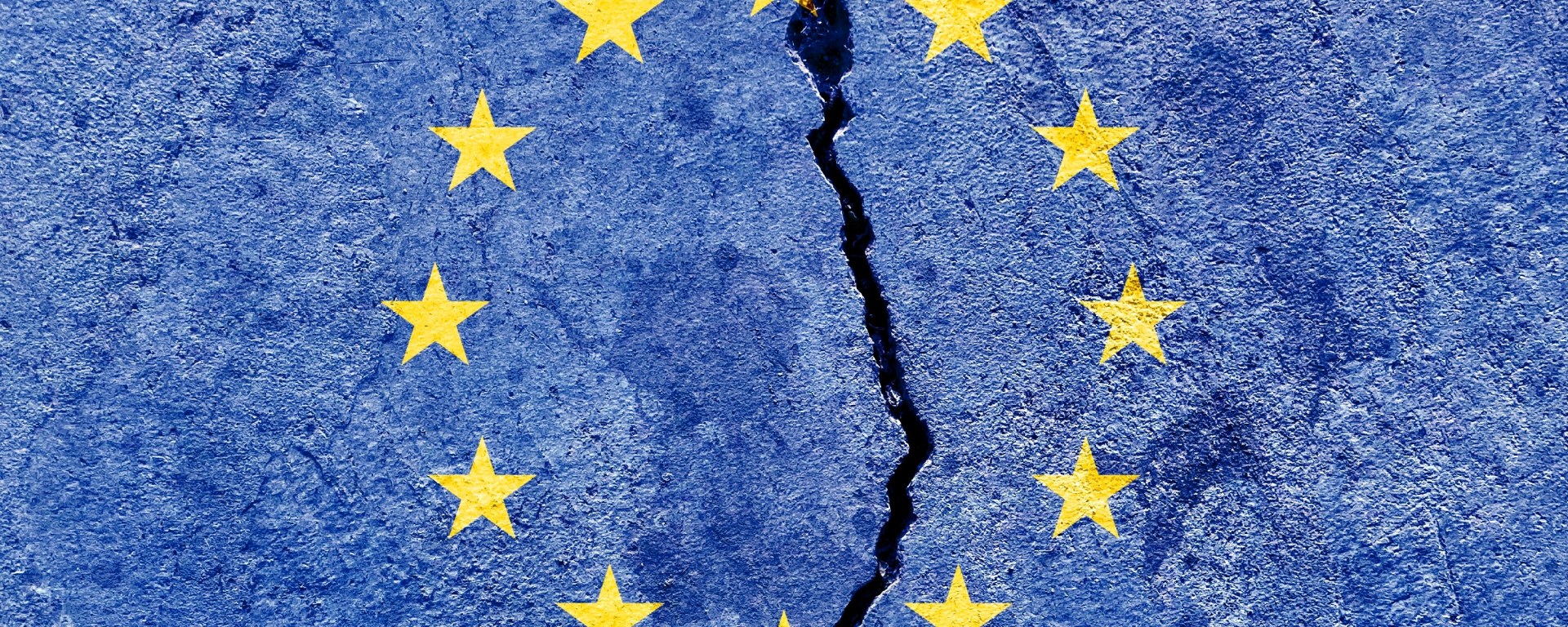
The European Union, since its creation in 1993, has always had to maintain a delicate balance between its control and the autonomy of its member states, to both uphold its rules and to allow a country’s culture and society to remain. Yet, it has so far delivered many benefits economically to its members states. However, with Brexit and the rise of right-wing, Eurosceptic parties across Europe, such as Giorgia Meloni’s Fratelli D’Italia (Brothers of Italy) and Marine Le Pen’s National Rally in France, the Union’s stability and strength have never been so fragile.
The European Union has survived crises before. Greece’s financial crisis almost ended the Euro, yet, after Germany demanded incredibly harsh austerity measures, the Euro and the European Union’s integrity came out with only a few scratches. Then in 2015 the migrant crisis occurred, where over a million immigrants from Africa and the Middle East came to the southern countries of the EU, fleeing conflicts or searching for a better life. However, many European governments responded to calls to accept migrants by shutting their borders. In the end, Merkel’s Germany ended up accepting by far the most immigrants. This whole episode led to Eurosceptic, far-right populist parties across Europe. In the 2017 German election, the AfD (Alternate for Deutschland), a far-right, anti-immigration party, took 1.5 million votes away from Merkel’s ‘grand coalition’. Each time, the European Union has managed to recover well. However, the culmination of multiple factors has led a significant amount of people to believe that the European Union may have a finite time left.
The main reasons member states signed up to the European Union are clear to see. After such devastating wars in the first half of the 20th century, political cooperation between some of the most powerful countries in the world seemed like an obvious choice. The benefits of open borders for free trade means that importing and exporting goods to other member states is easier, fostering more trade between each other. Those countries that have adopted the Euro would have done so to make their economies closer together, promoting stability, growth and economic integration of countries’ economies. Lastly, the benefits that are created from being able to work freely in any of the other member states are clear. Countries have access to a larger skilled workforce and workers themselves have more job opportunities. Yet, with a changing economic and political landscape, these benefits don’t show the whole picture.
The effects of COVID are still being felt by the world economy, but especially in the EU. COVID has had a massive impact on the way people work, with working from home dramatically increasing, reducing the need for workers to cross borders, when they can instead sit in their living room. The war in Ukraine’s affect on EU’s countries’ oil and gas imports due to sanctions against Russia has also brought into sharp focus how helpless countries are if they over-reliantly trade with partners, increasing reasons to become more self-sufficient and diversifying trading partners – something that is unlikely to happen in the EU, when trade between member states is such a key pillar. The work from home trend has also allowed foreign skilled workers to work for European businesses without a visa, for a much cheaper price than European workers.
Furthermore, countries, especially poorer ones, are seeing skilled workers, such as dentists or doctors, going to other, richer countries such as Germany or France. This will mean that a company from Romania, which has significantly lower wages than Germany, will have to offer higher wages than usual to be able to retain and attract these workers. This is an economic term called ‘brain-drain’, where skilled workers from poorer countries go to richer countries due to the pull of higher wages and a better quality of life, slowing down the development of the poorer countries due to a lack of skilled workers. However, in the EU, it is even more of a problem, as a worker can simply go from one country to another and find a job there, making it even easier to work in another country, increasing the ‘brain drain’ suffered by poorer EU members.
Then the question of the practicality and future of the Euro come to the spotlight. Though it makes trade between countries much easier, it’s also true that different countries have different economies and inflation rates, yet share the same currency, and thus must have the same central bank, which provides the same interest rates. The ECB (European Central Bank) oversees the Euro’s interest rates but has to accommodate for all member states’ inflation rates. At times of high inflation, like currently, when some countries in the EU have below 5% inflation, whereas others have over 15% inflation, trying to create a single interest rate that meets the needs of all those different inflation rates is very hard, and would be nowhere near as effective as if a country could decide its own interest rate for its own currency. The recent farmer strikes across Europe have shown the downsides of allowing the EU to control regulations to make sure free trade and other advantages of the bloc stay in place. Strict regulations, as well as tight environmental pledges, have led to farmers in the EU having to pay more for energy, transport and other costs, whilst also being forced to sell at a lower price to stay competitive, while swathes of cheap Ukrainian grain and other external goods come flowing into the EU, undercutting European farmers. This means that European farmers are having smaller and smaller profit margins, whilst also selling less.
Then there is the problem of immigration. One of the key principles of the European Union is open borders. Thus, when an immigrant is admitted to any member state, they immediately have access to go to any other member state. When there are differing policies about immigration, friction and restrictive borders are going to be put in place. Victor Orban’s Hungary had one of the highest asylum claims in the 2015 crisis, yet instead spent around 28 million Euros on a xenophobic, anti-immigrant campaign. One of the key reasons for Brexit’s success was the argument that limitless immigration from other EU countries was harming local economies and quality of life, as immigrants were taking British jobs, their children were using British schools, and they were using up the NHS’s resources.
The future of the EU is not secure, but is not under irreversible pressure either, for both the original four reasons of stability and cooperation, integration of economies, free trade and open borders, but also for modern day implications of the EU. The 27 nations together are much more of an economic and political player on the global stage than if they were each economically independent. Additionally, the increased trade between each other has managed to sustain economic growth – despite the post-COVID economic recovery struggling. Overall, the integration of these countries has simply allowed them all to thrive economically, and allow workers to find better wages, and increases competition between companies, helping consumers.
To return to the original question of just how likely the EU will collapse – I won’t try to predict the future, but it is certainly a bigger possibility than many assume. The key difference between past crises and the present day is the significant rise of Eurosceptic parties across member states. In the upcoming European elections, these populist, Eurosceptic right-wing parties are predicted to do very well. The war in Ukraine has showed how exposed economies are without some self-sufficiency, and COVID’s effects on jobs and the work from home revolution has made the free movement of people less poignant. Poorer countries are seeing their top talent move away, whilst richer countries are at risk of a poorer country dragging down the Euro’s value. Yet, the collapse of the EU would still be catastrophic for the stability of European economies, given how interdependent they have become under the EU. Brexit has objectively made a negative dent in the UK’s economy, yet the UK’s special relationship with the EU allowed it to make trade deals that other member states can’t, allowing it to weather the storm of reduced trade with continental Europe. Other members can’t do this, meaning the collapse in free trade between each other would cause economic turmoil. Further, the EU still has clear benefits, keeping Europe united at a time of global turmoil among other economic benefits. In the future, if another economic crisis occurs, where low deficit countries have to bail out again high fiscal deficit countries, such as Italy and Greece, I believe even more of the electorate would support more independence for their country, possibly straining the EU even more. The future of the EU is far from assured, but its collapse would spell great trouble for its members.
 etonomics.com