
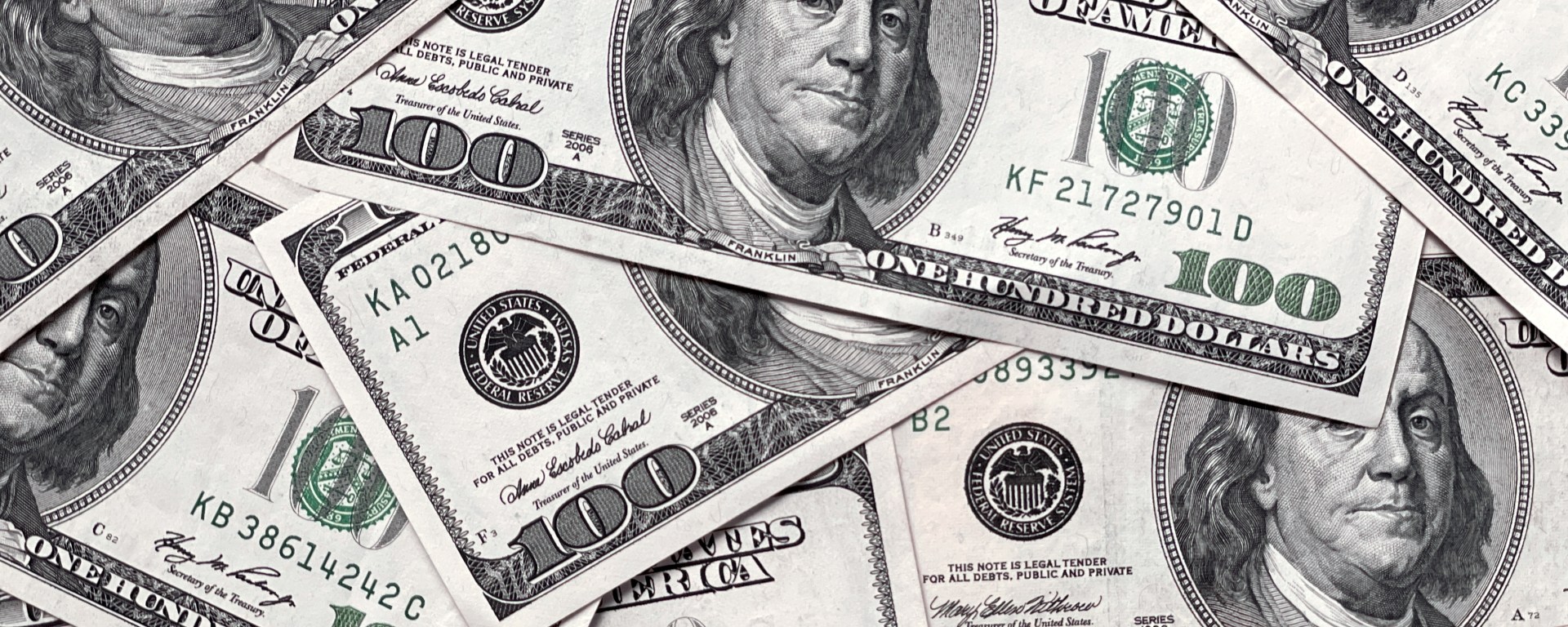
The word money emerged from the Latin ‘Moneta’, borrowed from the temple of Juno Moneta, the site of the then mint of Ancient Rome. It was Juno who constituted the Roman society’s paradigm of wealth. In this society where transactions were already conducted over monetary means, money was considered a true representation of its intrinsic value. That is, its worth was justified by the materials it was minted from – gold and silver. This is known as commodity currency. In stark contrast, our modern currency per se has negligible intrinsic value: physical cash takes the form of sheets of plastic or linen, whereas digital money stored in bank accounts is nothing but numbers in the balance. Their represented value is only sustained by our mutual agreement and beliefs, derived from government authorities and upheld by fiscal and legal constraints. We know this form of value representation as fiat currency. Yet, despite the discrepancy in the presentation of money and the representation of its worth, it is acknowledged that the role and purpose of money in our quotidian transactions has nevertheless remained untainted.
We can assume three core characteristics of money which allowed it to last: fungibility, divisibility, and scarcity. The primary role of money is to optimise transactions. Afterall, ‘money is a machine for doing quickly and commodiously what would be done, though less quickly and commodiously without it.’ The above-mentioned proposition established by J.S Mill appears to advocate fiat currency with greater conviction than its counterpart; its implications are twofold: the functional role of money is to serve as an efficient tool to facilitate trade and any economic activities within markets, and thus, being merely a medium of payment, justifies its intrinsic value, or rather the lack thereof. Moreover – and more significantly – Mill poses a comparison between a system using money and a system, when in its absence, operates ‘less quickly and commodiously’. What could Mill be referring to? And exactly what is the cause of its inefficiency?
Barter refers to a system of exchange in which parties exercise a direct exchange of goods and services in the absence of a medium of transaction. This occurs most often in situations of bilateral trade (two parties engaging in an exchange of goods and services). There are a few properties of bartering which makes this transaction feasible. Suppose two individuals desire milk and bread respectively. The first individual is a baker and the second, a dairy farmer. In the absence of currency, the two parties might satiate each other’s desires by conducting a trade with their own produce where the baker and farmer receive milk and bread, respectively, from the other. The trade was possible due to the double coincidence of wants. This occurs because both parties want what the other produces and a mutual agreement is then established. In addition, there is no objective standards of value during a barter transaction because the value of goods and services is determined subjectively based on one’s current needs. Bartering is hence situational; it can be imagined that there will be disparities in payment between a trade conducted by someone in desperate need and one done by a frugal individual.
Yet bartering is notoriously known for its inefficiency. In essence, many of the drawbacks of bartering are the very properties which define it and which provide reasoning to neglect it in our modern societies. One of the primary reasons bartering is impractical, albeit feasible, is that it is challenging to find opportunities of trade. The double coincidence of wants can be achieved only if one finds someone else who, by mere chance, has the reciprocated desire for his or her goods. This means that the time spent searching for trade bears the immense opportunity cost of producing more goods and services which would supply economic agents with greater utility and welfare under a system where transactions are efficient. In addition, even though the conditions of a trade have been met, one might not be able to receive the desired amount due to the indivisibility of certain commodities: live cattle would never be traded for a pint of milk for example. In the macroeconomy, the said transaction would severely hinder economic growth given the transaction costs packaged with barter. It can thus be concluded that barter is a hindrance to trade, be it on a micro or macro scale.
However, there are circumstances in which society has been coerced into our most primitive trading methods. This occurs when the characteristics of money no longer hold. The Zimbabwe hyperinflation crisis gave rise to one of the most acute inflation rates in history, estimated at 79,600,000,000% in November 2008, due to the over-injection of liquidity (money) into the economy to combat debt. The excessive influx of money drove the represented value of the Zimbabwean dollar to negligible amounts and hence giving rise to the infamous $100 trillion banknote. In such cases where money is no longer scarce and is subject to constant changes in value, sellers who quote their prices with Zimbabwean dollar would face an almost immediate loss post-purchase if the profit was not traded for another currency. Imagine that one sells a good or service for a certain amount of dollars and that inflation increases by 100 percent every minute. By the second minute, the seller’s return will merely constitute half of the original profit. Hence, one might use bartering as a last resort to maintain a non-fluctuating value which is inherent to the good.
Above all, in a sensibly regulated economy, fiat currency is still considered sovereign and the most efficient medium of exchange since it addresses and remedies the various limitations of barter, namely the ability to divide, and it avoids the double coincidence of wants by separating a transaction into two parts which need not to occur simultaneously. These inefficiencies were discussed in Adam Smith’s Wealth of Nations, the major ideas of which are explained in the points aforementioned. Smith further conjectured that it was these inefficiencies of barter trade which stimulated the emergence of money, on whose foundation our modern economic infrastructure and growth were developed. That said, money, although commonly used, has a rather more nebulous origin than what we believe is apparent: did the inefficiencies of barter engender money? or did the creation of money destroy barter?
 etonomics.com