
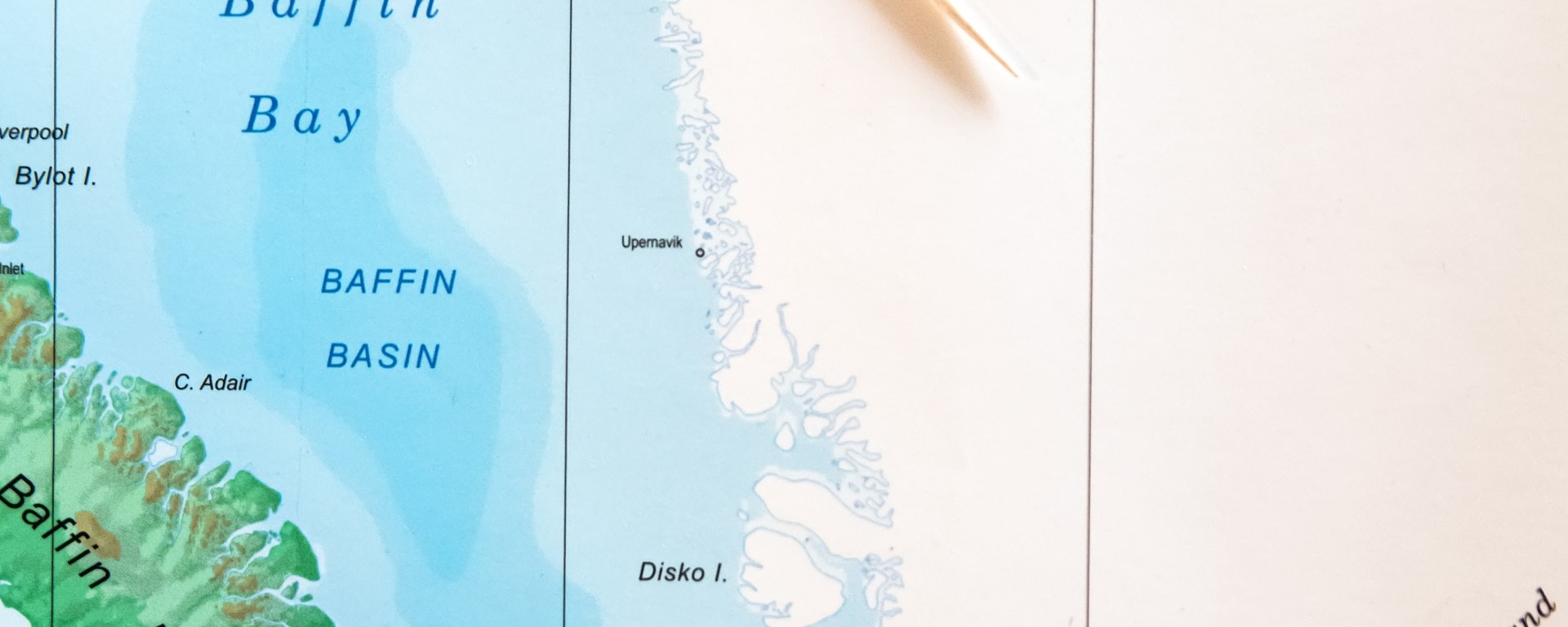
‘We need Greenland for national security purposes,’ declared President Donald Trump in a press conference on January 7th, a move shrouded in controversy that angered the EU, Denmark, and other rivals such as China and Russia. A closer look shows that his goal is much bigger than just spending almost $70 billion to buy a huge, mostly empty hunk of ice.
Firstly, this was not unprecedented; Trump first showed his intentions to buy Greenland in 2019 during his first term as president. The US President describes this as ‘a big real estate deal.’. However, talks did not advance very far with Denmark (which currently owns Greenland). This time, despite European officials warning him not to escalate, Trump has stated that he will resort to economic or military force if needed. The Danish Prime Minister Mette Frederiksen also insisted that Greenland was not for sale in a confrontational phone call to the US President a few weeks ago. What will this mean for Denmark? The biggest threat would be the US drastically increasing tariffs on Danish imports, followed by the far-fetched (but nevertheless plausible) military action. The former is particularly worrying for Denmark, as almost 15% of its total exports are to the United States (roughly 13 billion USD).
Greenland has long been seen as a key for US security; particularly if Russia invades Western Europe. Greenland could serve as a strategic defensive position between the US and Europe. In fact, the northernmost US military base is the Pituffik Space Base in northwest Greenland, which is equipped with a missile detection system. As President Trump puts it, ‘You have Russian boats all over the place, and you have China’s boats all over the place,’ essentially implying the necessity for an expansion of the United States’ sphere of influence. Interestingly, Trump was not even the first US president to suggest the idea of owning Greenland; under the Truman administration (1945-1953) during the Cold War, this frozen island was noted as a stepping stone between the USSR (now Russia) and the US. Today, the US President is hoping to introduce ‘security investments’ to this barren island, such as an extensive radar coverage system and further anti-submarine capabilities to intercept Russia through the Arctic.
Aside from potential military advantages, Greenland is blessed with the eighth largest reserves of rare earth elements in the world, as well as large amounts of lithium, cobalt, and copper. These are crucial for making phones, batteries, and anything that contains microchips. According to the Financial Times’ estimate for the price of the territory of $1.1 trillion, rare earth metals account for over half of its value at over $600 billion. However, much of this estimated wealth is currently unreachable due to the island’s lack of funding and infrastructure. As Greenlander and geology professor Minik Thorleif Rosing explains, ‘It is not because Greenland doesn’t have a lot of minerals, but minerals are not the same as wealth.’ While Greenland may be sitting on these mineral riches, any ‘gold rush’ will be painfully slow to materialise, especially as 80% of the island is under a permanent ice sheet. Despite this, its politicians hope that future mining revenues can reduce reliance on the $600 million annual subsidy from Denmark. Most local communities also support this; overseas miners shop locally, employ locals, and charter local vehicles, all helping to boost the economy. In 2022, the US Agency for International Development (USAID) launched a two-year initiative to encourage development in the mining sector and improve Greenland’s trade relationship with the US. However, not much has happened due to environmental and political restrictions, leading to scepticism about whether Greenland will ever be profitable, especially as its government banned the extraction of its huge crude oil reserves (30% of the world’s undiscovered gas).
One key problem hindering Trump’s expansionist plans is the adverse reaction of local Greenlanders and many European nations. Despite the US President claiming the island’s population ‘want to be with us (the United States),’ the data would suggest otherwise. A new opinion poll released last week showed that 85% of Greenlanders do not want their island to be part of the United States. At the same time, Frederiksen met with German chancellor Olaf Scholz, saying, ‘I want to ensure that all of Europe stands together,’ to which Scholz responded that ‘borders must not be moved by force.’. Furthermore, other members of the EU have spoken out against the US singling out Denmark and threatening them with economic and military action. For example, French President Macron expressed his dissatisfaction and risked his relationship with the newly inaugurated US president, saying, ‘Everyone in Europe can see that it will be a different collaboration with the US now.’
So what can we expect from this? Well, on the 2nd of February, both Canada and Mexico announced retaliatory tariffs after Trump implemented his own a few days ago. The European Commission heavily criticised him soon after, saying, ‘The European Union regrets the US decision to impose tariffs on Canada, Mexico, and China. Tariffs create unnecessary economic disruption and drive inflation.’ In 2023, 20 members of the EU exported more to the US than they imported, which Trump repeatedly complained about. Although Europe has not been officially targeted yet, there is a high probability that the US will begin pressuring Denmark if Trump keeps his word, in which case the rest of the continent is likely to respond.
 etonomics.com