
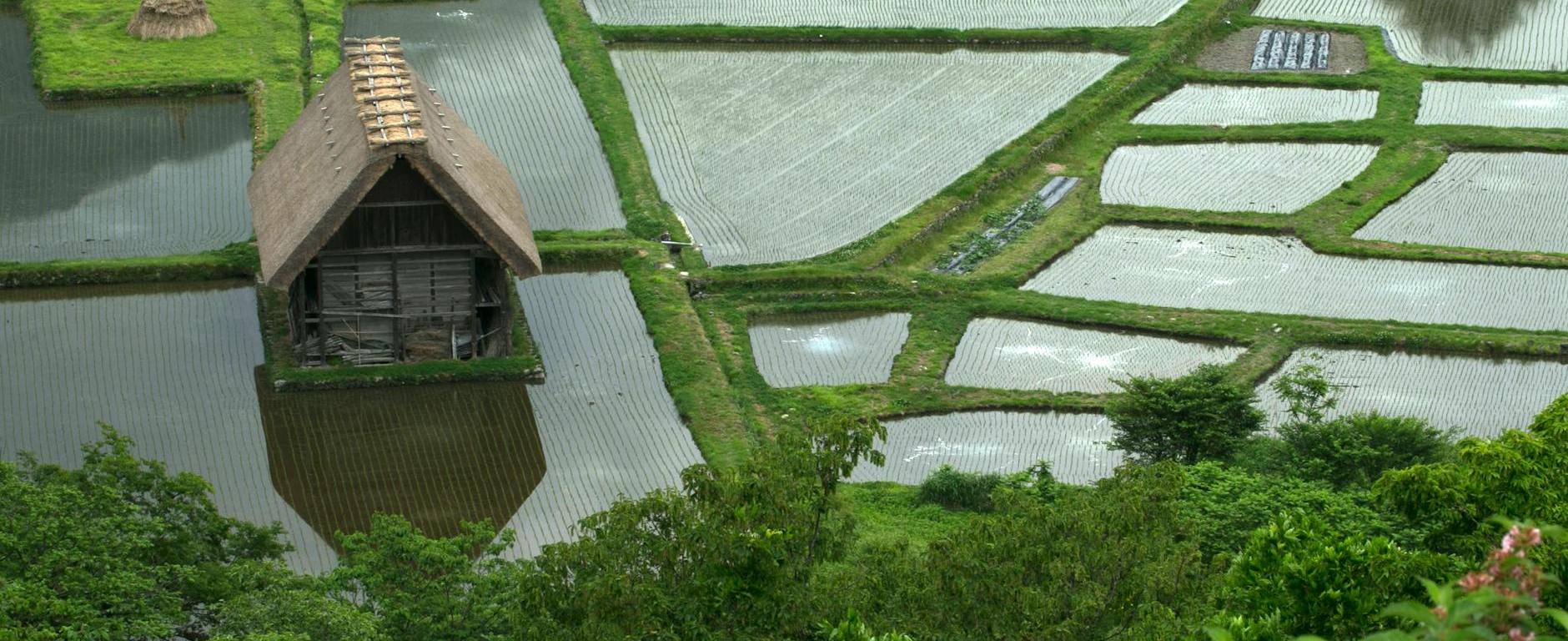
When you think of the Japanese economy, what immediately comes to your mind? The supposed “lost decade”, its deflationary policies or zero interest rates that reduce the effectiveness of its fiscal policies? Or perhaps, you think more positively, zooming in on the advanced technology industry or its high investments in human capital. But what you probably didn’t think about, unless you read the title, were the various financial consequences that rice has had on its economy. So, how has the nation that consumes 6,200,000 tonnes of rice every year been affected by its price movements alone?
Japan’s financial economy has been greatly influenced by rice mainly due to the fact that rice was, and continues to be, the main source of nutrition for the Japanese people. Rice often served as a form of salary in feudal Japan and the Edo period (1603-1868) was a measure of wealth and power, so much so that a Lord’s wealth would be measured with the unit of “koku”(150kg of rice). In fact, the Shogun himself owned 4 million kokus. Just to put that in perspective, this would be enough to fill 288 Olympic sized pools with rice.
The first case of the economic impacts that the lack of rice had on the economy can be seen in the 1918 rice riots. Economic conditions brought about from the First World War caused greater inequality, as factory owners suddenly experienced overnight success due to foreign demand for textiles and other materials. On the contrary, ordinary citizens suffered due to real income being unable to keep up with prices, leading to the decline in the purchasing power of ordinary citizens by 50%. This, of course, led to many struggling to buy food including rice. Furthermore, speculative buying of rice due to a suspected concealment of the rice shortage by the Japanese government, who refused to release a study they had conducted on rice stocks earlier in the year, exacerbating the rice problem. Thus, rice prices increased by 60% in a period of a month. The ultimate trigger of the rice riot came when local residents of Toyama saw rice being exported to urban areas without a sufficient rice stock to be left in the area, reducing supply while demand stayed inelastic. The protests that followed would be amplified by its nationwide spread, as 1 million, citizens of Japan participated in the protests. One economic consequence of the riot was the severe financial burden to Japanese rice importers and shops, as they were burnt or destroyed. (See figure 1)
Figure 1 (The aftermath of the riots)

The Japanese government’s interventions on the rice economy also increased post 1918, as the Japanese Prime Minister and his cabinet’s resignation remained a testament to the political instability caused by poor governmental policies when handling food supplies. The policy on the rice market included heavy subsidization to match the struggle to reach a price equilibrium between the urban buyers and rural sellers. Additionally, the riot increased the severity of Japan’s exploitative policies on its colonial counterparts, increasing imports from countries such as Korea and Taiwan. The event also brought to attention the underlying frustration of the Japanese population on the lack of governmental intervention on economic exploitation by the top 1%, or according to the Japanese government, a “crisis in relations between labor and capital”. Thus, the government would offer social welfare as a part of its long-term policy, creating soup kitchens and free school meals as a result.
The next major rice crisis occurred in a much more modern setting of Japan, in 1993. The abnormal summer of 1993 led to major crop failure, causing a 30% decrease in the rice supply that year. This led the Japanese self-sufficiency of rice crops to crumble, which had not occurred from 1960 due to modern farming techniques utilized post WW2. The sudden supply-demand imbalance exposed the inefficiency of the Japanese rice economy, as emergency non-native rice that was imported was rejected by the people, ending in food loss or inefficient usage. The rejection came in the form of media rejection, as well as consumer behavior, as the Japanese people would deliberately waste non-native rice that was mixed with Japanese rice. The rejection was worsened by the inelastic demand (consumers continued to purchase rice despite price changes) for Japanese rice, resulting in greater frustration for the government that failed to curb prices.
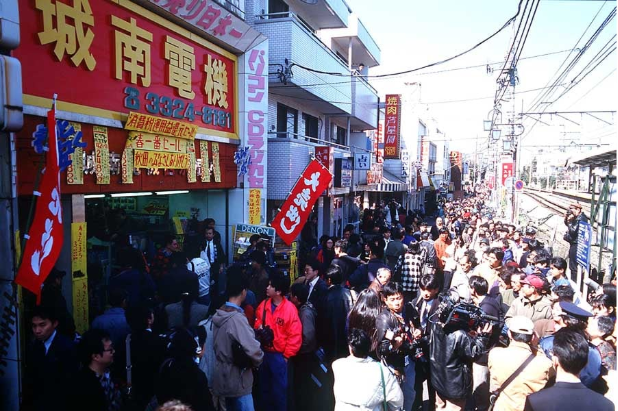
The economic consequences of rice insecurity are also not to be overlooked in this story. The crisis led to the rise of a black market for rice (which already existed due to tight governmental control on rice), as illegal trade routes hidden from the eye of the Japanese Food Agency sold rice below market price, which led to businesses exploiting these routes to attract customers. (See figure 2) The increased market share of the black market undermined the Japanese policies on rice, resulting in the government abandoning the state-controlled rice sector. Previously, farmers were legally obligated to sell rice to the Japanese government, so that the government could resell them through government-approved vendors at a controlled price. However, the advent of non-native rice and its inefficient use led to the overall sentiment that the government caused more inefficiencies in the market rather than good, thus leading to the abandonment of this law. Furthermore, the abolishment of the Food Control Law in 1995 led to the rise of governmental rice stores, allowing the government to stabilize the market with its release or purchases of rice, easing any sudden dips in prices or demand without monopolized control.
Figure 2 (people lining up for rice offered at a 50% discount)
Furthermore, the event also had a significant effect on Japanese trade. The weakness of domestic supply equated to Japan acquiescing to a minimal access law from WTO, which forced Japan to purchase 4% of domestically consumed rice from foreign nations. However, Japan would set up a 700% tariff on any free rice imports, essentially minimizing any rice imports outside of the quota. While the majority of rice within the 4% quota was used through industrial means due to the consumer behavior discussed above, leading to a weak impact on the domestic market.
Even now, rice prices continue to play a role in the Japanese economy. The rice price in Japan has recently grown by 91% in the last year, resulting in a noticeable rise in the cost of living. Assuming average consumption, a family of 4 could be expected to spend ¥84,000 (422 GBP) more on rice every year. This has been true, despite the Japanese government’s best efforts to lower prices through releasing their own rice stock of 300,000 tonnes from the governmental stores established post-1993. With an approximated 19 million Japanese citizens already living in poverty, the decrease in disposable income could have economic consequences for the whole economy as consumerism decreases.
The recent rise in rice prices has also had political consequences as well, affecting fiscal policy. Taku Eto, the Farm Minister of Japan, true to Marie Antoinette’s “Let them eat cake”, stated that he gets so much rice from his political supporters, he could “sell them”. As you may have guessed, the statement caused widespread criticism as ordinary consumers suffered from the rise in prices, causing his resignation; ordinary citizens of Japan blamed politicians, who had clearly never been near a supermarket in their life for the rising prices. Events such as the resignation have displayed the importance of rice prices in political populism in Japan. Thus, despite significant financial burdens that subsidizing rice farmers has on the Japanese fiscal deficit (¥4.1 trillion/year or 25 billion GBP/year in 2021), the Japanese government has reversed its policy to encourage efficient commercial farming and now plans to no longer incentivize farmers to switch towards more profitable crops with tax incentives. This policy would be less productive due to rice’s relatively low yield and economic value per kg.
Japan’s rice market is a salient example of the consequence of relying on a culturally significant staple crop with inelastic demand, where shifts in supply and demand cause knock-on effects on fiscal policy, trade policies, political stances and even welfare programs.
 etonomics.com