Corporate Colonialism

At its peak, the English East India Company (EIC) was not only the first multinational company of its day, but was also the largest corporation of its kind: the EIC surpassed the scale and power of many nations, effectively becoming the governing authority of India, one of the most economically productive regions of the era. Furthermore, even though the East India Company’s monopoly on trade waned in … Continue reading Corporate Colonialism


Christiania: Economic Lessons from Copenhagen’s Self-Governing Society

Freetown Christiania is an experimental self-governing community in Copenhagen, amidst the “hippie” counter-culture movement of defiance that characterised the time. Born in 1971 from the occupation of an abandoned military base, Christiania defies conventional economic norms, operating without private property and with a unique model of communal ownership and resource sharing. Over the past 50 years, it has evolved into a sustainable micro-economy that draws … Continue reading Christiania: Economic Lessons from Copenhagen’s Self-Governing Society

Britannia on the Brink: Is the UK Turning into Greece Lightning?

In the aftermath of the 2008 global financial crisis, Greece was faced with crippling debt. Resulting in the implementation of austerity measures (policies which reduce government spending and shrink the budget deficit), slumping GDP and overall political instability. Despite the UK being one of the largest economies in the world its national debt (£2,686 billion) has been ever rising, especially after the pandemic and specific … Continue reading Britannia on the Brink: Is the UK Turning into Greece Lightning?

UK Productivity

What strategies would be most effective for improving UK productivity?  Introduction Enhancing productivity, defined as the ratio of output to input volume [1], is critical to unlocking higher UK economic growth. Productivity improvements account for half of the differences in GDP per capita across countries (Chart 1). Growth in labour, capital, and Total Factor [2] productivity would translate into higher standards of living and prosperity growth. As Krugman … Continue reading UK Productivity

The Christmas money machine

Christmas is one of the largest holidays on Earth, if not the largest. Although many religions, such as Judaism, observe other traditions, such as Hanukah, it has become increasingly common for families to partake in multiple celebrations. Interestingly, the rise in popularity of Christmas is less about its original Christian significance – namely to remember the birth of Jesus Christ – and more about its unique way of gift-giving … Continue reading The Christmas money machine

The Secret to Australia’s Success

Among the economies of Southeast Asia, Australia stands out on its own. Viewed by many as the stronghold of the West in the East, its GDP per capita of $69,000 competes with the richest EU countries and even stands above the UK’s. Some attribute modern Australia’s success to its colonial origins or to its influx of skilled immigrants over the last hundred years. However, the … Continue reading The Secret to Australia’s Success

Shareholders and the Dutch East India Company 

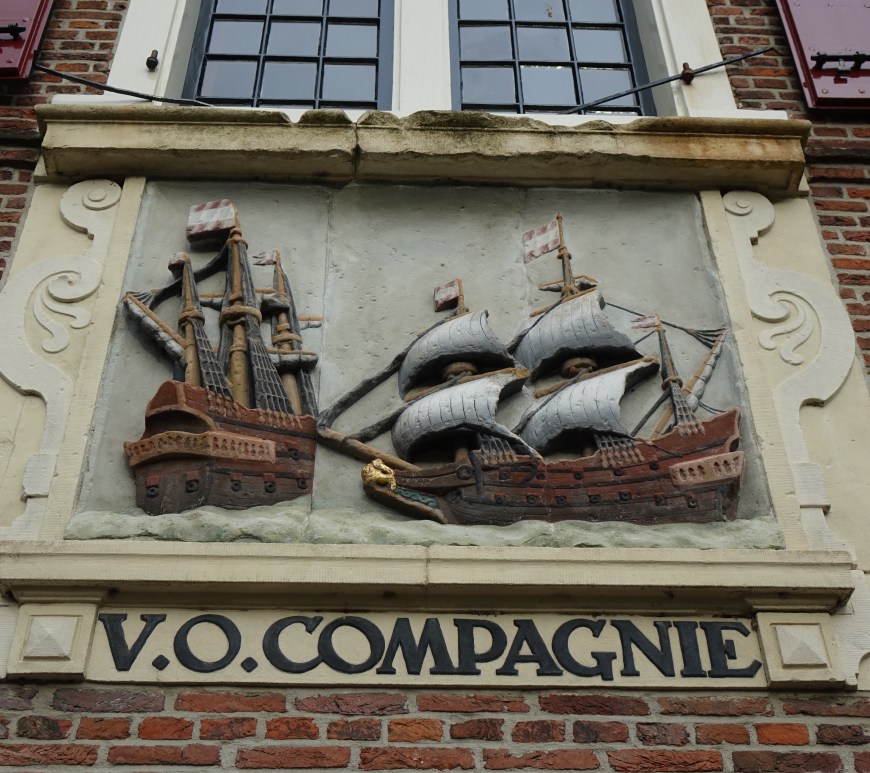
During the early 17th century, the Dutch found themselves in increasingly competitive waters concerning their early dominance of maritime trade. The English, Portuguese and Spanish were all threats to the diminishing share of the Netherlands in the lucrative spice trade. Something had to be done. Yet how would a single organisation gather the huge amounts of capital required for such an undertaking? Creating a corporation … Continue reading Shareholders and the Dutch East India Company 

Cracks in the Crown: The decline of the UK Economy 

During the 19th century, the UK stood as the preeminent global superpower. From the British Raj in India to the Dominion of Canada, its riches and power were unmatched. Since the height of the empire in 1922, when the UK governed 23% of the world population (458 million people with a domestic population of only 42 million) (Source: Statista), the UK has seen a gradual decline … Continue reading Cracks in the Crown: The decline of the UK Economy 

Revolut: Disrupting traditional banking or becoming just another bank?

“We change the way you do money” is the slogan that greets visitors to the website of Europe’s largest startup, Revolut. But does the company uphold its promise? Founded by Nik Storonsky and Vlad Yatsenko in 2015, their fintech company Revolut had one aim: to transform the way we spend and transfer money abroad. Initially, the platform enabled travelers to pay in 90 countries without a foreign … Continue reading Revolut: Disrupting traditional banking or becoming just another bank?

Tax Evasion and its Motives

Taxation is the backbone of many countries, funding vital infrastructures such as national defense and social security. Yet, a surprising number of people resent the sums of money that are taken from their salary and resort to tax evasion (deliberately underreporting their earnings) through a variety of methods. An investigation from Bloomberg shows that the richest 1% of Americans, a country widely known for its economic and political … Continue reading Tax Evasion and its Motives