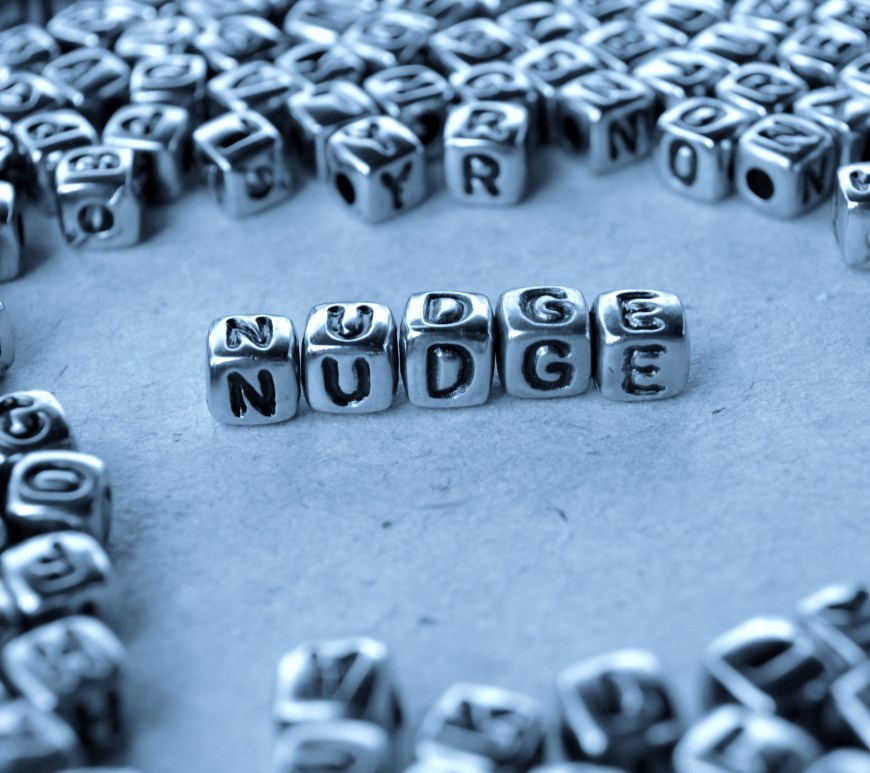
Nudge spelled out from dice with letters on

Nudges: Will they work forever?

As has been well-documented in academic research, people are by no means rational. In their book ‘Nudges’, Thaler and Sunstein famously describe two types of thinking: system 1 and system 2. The former is a more automatic method involving quick judgement calls which are more prone to irrationality, while the latter is much more deliberate, and less prone to external influences. From the moment we … Continue reading Nudges: Will they work forever?

What is Rationality in Economics?

Rationality in economics is described to be a decision-making process of an economic agent that seeks to maximise utility. To best understand the notion of rationality in economics, it is best to compare it to rationality in a more psychological sense: the quality of being able to think sensibly or logically. This comparison highlights that rationality in economics is more concerned with the outcome of … Continue reading What is Rationality in Economics?

The US v. North Korea: The role of game theory

Tension between the United States and North Korea has reached a stage where missile strikes have become an alarming possibility. If tensions escalate further to a state where military action looks almost certain, game theory could offer us insight into finding the best strategy to tackle the problem. Firstly though, what does Kim Jong Un hope to achieve by possessing a nuclear arsenal? It is … Continue reading The US v. North Korea: The role of game theory

“What Money Can’t Buy” by Michael J. Sandel

Sandel makes it very clear in his book, What Money Can’t Buy, that he is a philosopher. You might expect Sandel, as the book is a meticulous analysis of the free market – an entirely economic concept – and its effects on society, to at least explore economic thought and reasoning, but he is scornful of it; he likes to distance himself from it throughout. … Continue reading “What Money Can’t Buy” by Michael J. Sandel