The IMF and World Bank in a Multipolar World

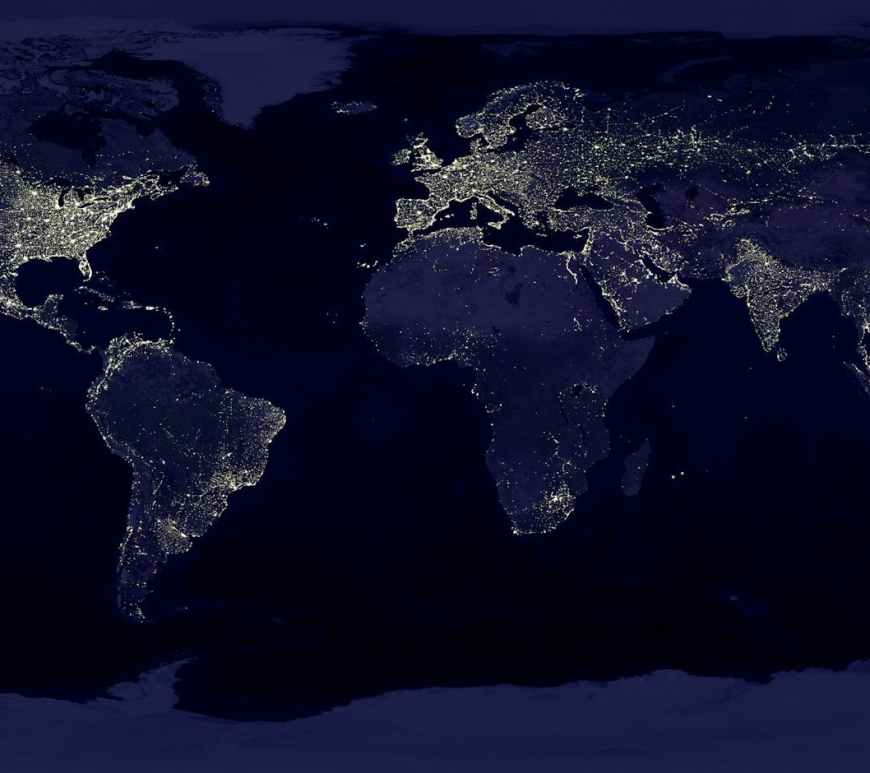
The IMF and World Bank in a Multipolar World A multipolar world economy is defined as a world order where major economic power does not lie in the hands of one single state but is instead divided between various centres of economic influence across the globe. Over the last few decades, global order and economic influence have shifted from a Western-centric polar model to a … Continue reading The IMF and World Bank in a Multipolar World

Great Expectations and India’s Economy

In 1979, Deng Xiaoping announced China’s intention to “open up” to the world’s economy. It has been a pariah state to the west since its Communist revolution in 1949, and its later “Cultural Revolution”. The reforms, which involved opening Special Economic Zones (SEZs) in harbour areas like Shenzhen, dividing up collectivised farmland and allowing private businesses to operate, saw China’s GDP grow by over 9% … Continue reading Great Expectations and India’s Economy

Gold Standard vs Fiat Money

Ever since the creation of money, when society disengaged from barter (trading goods with one another) and introduced a medium of exchange (money), humanity has most commonly tied the value of money to a commodity. For most of the first millennia, money was tied to silver or bimetallic standards. However these systems posed a significant number of problems, especially in times of economic crisis. As … Continue reading Gold Standard vs Fiat Money

The Bretton Woods System

The Bretton Woods System: a Blueprint for a Globalised Economy The Bretton Woods System was a set of international economic and financial agreements established in July 1944 during a conference in Bretton Woods, New Hampshire, USA, towards the end of WW2. The agreements intended to establish a renewed framework for the global economy, stabilise the international monetary system, and prevent economic conflicts such as protectionism … Continue reading The Bretton Woods System

Trump’s Tariffs: Short Term Protection or Long Term Economic Risk?

Note: This article was written in March/April 2025, when the initial set of tariffs had been proposed.   Trump’s Tariffs: Short-Term Protection or Long-Term Economic Risk?  Introduction  On November 5th, 2024, Donald Trump was re-elected as President of the United States, triggering wide-spread impacts for the global economy. Almost immediately, he resumed his previous trade war with China and launched new tariff-based confrontations on Canada and … Continue reading Trump’s Tariffs: Short Term Protection or Long Term Economic Risk?

Low Fertility and its Economic Consequences

What are the causes and consequences of low fertility rates in advanced economies? How can we combat them?   Introduction  In this article, the aim is to explain and find ways to combat the main causes of low fertility rates in advanced economies: the cost-of-living crisis, the declining rates of child mortality and the empowerment of women, which encompasses both their higher education and the increased … Continue reading Low Fertility and its Economic Consequences

The Google Antitrust Cases

The contrasting antitrust challenges faced by Google in the EU and the US highlight the different regulatory approaches to addressing Google’s monopoly in the markets of online search and digital advertising, specifically in areas like search engine services, search text ads, and ad exchanges. In Europe, the company has encountered fines totalling billions, often linked to long-standing concerns over market abuse. However, the EU’s recent … Continue reading The Google Antitrust Cases

When Growth Fails

“Growth for the sake of growth is the ideology of the cancer cell” – Edward Abbey, The Second Rape of the West, 1975. In the above quote, Abbey refers to the shrinking wilderness of his beloved Arizona, industrialised by resource extraction and urban expansion. However, such a statement goes far beyond wilderness: when economic expansion is the common goal, it damages the very foundations that … Continue reading When Growth Fails

The Economics of Higher Education

Higher education refers to learning at universities or similar institutions, typically leading to a degree. It has long been a key driver of economic growth, offering individuals higher wages and better job security due to their higher perceived worth. However, with tuition fees rising and student debt reaching record levels, concerns are growing about whether a degree is still worth the cost.  In the United … Continue reading The Economics of Higher Education