
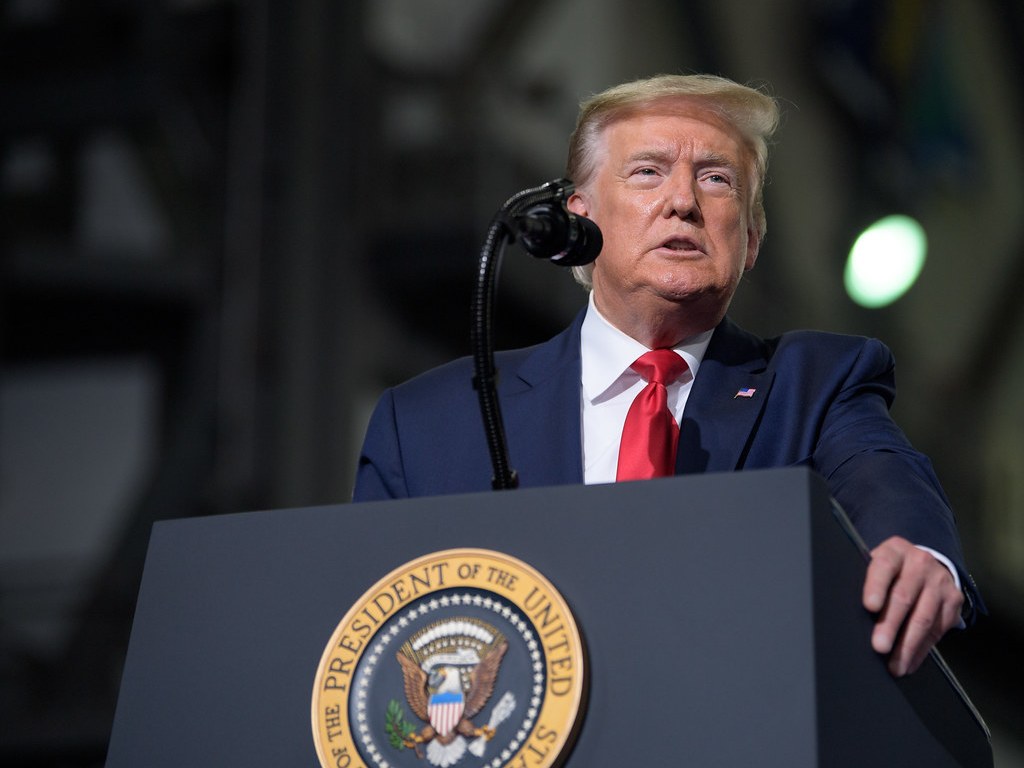
Since Donald Trump’s return to the presidency in January 2025, “Trumponomics” has redefined U.S. economic policy through a lens of protectionism and economic nationalism. Central to this strategy are aggressive tariffs, including a universal 10% tariff on all imports, effective April 5, 2025, and targeted rates as high as 245% on Chinese goods. By May 2025, these measures have catalysed a seismic shift in global trade, inflating costs, fracturing supply chains, and eliciting widespread retaliation. This article explores the principles of Trumponomics, the tariff framework, and their profound effects on the global economy, drawing on recent analyses to assess the broader implications.
The Framework of Trumponomics and Tariff Implementation
Trumponomics aims to address a $1.2 trillion U.S. goods trade deficit in 2024 by leveraging tariffs to protect domestic industries and re-shore manufacturing. The administration frames trade imbalances as a national security threat using the International Emergency Economic Powers Act (IEEPA) and Section 232. Key tariff measures include:- A 10% baseline tariff on all imports, enacted on April 5, 2025- Country-specific tariffs, such as 145% on Chinese goods (escalated to 245% on certain products), 25% on Canadian and Mexican imports, and 20% on European goods.- Reciprocal tariffs, adjusted based on trade deficits, with a 90-day suspension announced on April 9, 2025, excluding China.
The policy seeks to counter perceived unfair trade practices, such as foreign value-added taxes, currency manipulation, and incentives for domestic production. However, the approach has been criticised for its lack of strategic coherence, with the World Trade Organisation (WTO) noting a disregard for the “most favoured nation” principle, potentially undermining decades of global trade norms.
Impact on Global Trade
The tariffs have unleashed significant disruptions across global trade networks:
The global financial system reacted sharply to the announcement and implementation of these tariffs. Global equity markets lost approximately $10 trillion in value over three days in early April 2025, with the S&P 500 experiencing its worst four-day drop since the 1950s. The U.S. dollar weakened, with the Chinese yuan hitting a 19-month low. – The WTO projects a 0.2% decline in global goods trade for 2025, with the U.S. and China’s trade expected to plummet by 81% due to bilateral tariff escalations. Imports to the U.S. are projected to fall by $740 billion in 2025, a 22% reduction, driven by an effective tariff rate of 11.1%, the highest since 1943.
Beyond markets, the most visible fallout of Trumponomics is in global logistics and supply chains. A 64% plunge in ocean container bookings from China to the U.S. threatens retail and medical supply chains, with potential shortages of critical items like the blood thinner heparin and medical devices such as MRIs and ventilators. Companies like PepsiCo, Nestlé, Walmart, and Target have warned of price hikes and reduced earnings. – Tighter U.S. customs checks have congested ports, reducing demand for logistics workers and truck drivers and further straining domestic supply chains.
The global reaction has been swift and strategic. China imposed 125% tariffs on U.S. exports, the EU has prepared $100 billion in counter-tariffs on U.S. goods like bourbon and aircraft parts, and Canada has announced countermeasures. These actions risk fragmenting global trade networks. – Smaller economies like Poland (facing a 0.4% GDP loss) and Nigeria are seeking bilateral agreements to mitigate impacts, with Nigeria emphasising intra-African trade through the African Continental Free Trade Area (AfCFTA) to offset losses
The U.S. is beginning to feel the blowback at home. The International Monetary Fund (IMF) slashed global growth forecasts to 2.8% for 2025, with U.S. growth projected at 1.8%, down from 2.8% in 2024. The Penn Wharton Budget Model estimates a long-term 6% GDP reduction and 5% wage decline in the U.S.- The tariffs impose an average tax increase of $1,300 per U.S. household in 2025, with a lifetime loss of $22,000 for middle-income households. Global trade policy uncertainty is expected.
The Cost of Trumponomics
While Trumponomics aims to bolster U.S. manufacturing, the outcomes are mixed. Initial job gains in sectors like steel are overshadowed by broader losses, with steel-consuming jobs outnumbering steel-producing jobs 80:1. The projected $5.2 trillion in tariff revenue over a decade is offset by significant economic costs, including a 6% GDP decline and a 5% wage drop. The reciprocal tariff model assumes foreign compliance, but retaliatory actions from China, the EU, and Canada indicate resistance, with China’s restrictions on critical minerals posing a risk to U.S. industries like Apple. The policies focus on goods trade deficits ignore U.S. service trade surpluses and the dollar’s reserve currency benefits, which are now under threat as global investors reassess exposure. Policy uncertainty, exacerbated by the April 9 suspension and erratic statements, has fuelled market volatility, with the WTO warning that sustained uncertainty could lead to a 1.5% decline in global trade.
Conclusion
Trumponomics represents a distinctive approach to economic policy that combines traditional Republican priorities like tax cuts and deregulation with a more nationalist approach to trade and manufacturing. While Trump’s first term saw economic strength before the pandemic disruption, his second term begins with economic uncertainty as aggressive new policies are implemented.
Trump and his supporters argue that this economic nationalism is necessary to correct decades of policies prioritising global integration over national interests. Critics counter that the approach risks disrupting efficient global supply chains, increasing consumer costs, and potentially isolating the U.S. economy at a time when international cooperation is essential for addressing global challenges.
The coming years will be crucial in determining whether Trumponomics can achieve its ambitious goals of national economic revival or whether the costs of economic nationalism will outweigh its benefits. The outcome will depend not only on policy execution but also on how businesses, consumers, trading partners, and the Federal Reserve respond to this dramatic shift in the U.S. economic approach.

