Unregulated and Unchallenged: Iceland’s Banking Saga

In the midst of a global public health emergency, Iceland has fared exceptionally well amongst Western nations, with only 1,804 reported cases and 10 deaths. Twelve years ago, however, the story was very different; Iceland was facing collapse as a result of a Wall Street contagion, another pandemic that would expose the fundamental weaknesses of deregulated financial systems. Within a week, the entire banking sector … Continue reading Unregulated and Unchallenged: Iceland’s Banking Saga

Burger being 3D printed in a shopping mall

3D-printed Food

On the 1st April 2016, the Guardian newspaper published an April Fool’s article describing the Foodini – “the first 3D-food printer to print all types of real, fresh, nutritious foods”. Many people smirked actually tempted to buy. But it wasn’t a joke. 3D food printing is no sci-fi experiment or Wallace & Gromit invention. Today 3D food printers actually exist and are coming to your … Continue reading 3D-printed Food

The Rationality of Irrationality

Reinhard Selten, 1994 Nobel prize and founding father of experimental economics, predicted that individuals wouldn’t play the conventional Nash Equilibrium in the Ultimatum Game, better known as a take-it-or-leave-it offer. This was proven to be accurate when his student Werner Güth showed this supposedly irrational behaviour in his 1982 experiments. In game theory a Nash Equilibrium is a scenario where neither player would benefit from … Continue reading The Rationality of Irrationality

The Covid-19 Crisis: Emerging Markets Hang in the Balance

“All countries need to work together to protect people and limit the economic damage. This is a moment for solidarity.” Kristalina Georgieva Managing Director and Chairwoman of the IMF The COVID-19 crisis has already left some of the world’s most advanced economies in dire straits. News outlets have been quick to cover the stringent lockdowns and plummeting markets of the developed world. However, media coverage … Continue reading The Covid-19 Crisis: Emerging Markets Hang in the Balance

Rent-seeking and Inequality

26 billionaires own as much as the world’s poorest 3.8 billion people – perhaps unsurprising given how little the poor in developing countries own. Inequality is widely accepted as not only inevitable but desirable to an extent, to incentivise innovation and productivity, but in OECD countries it is at the highest level for the past half century. Those at the top of the income and … Continue reading Rent-seeking and Inequality

Wall at world bank

An interview with Aart Kraay: Acting Head of the World Bank

I was lucky enough to be able to have a brief conversation with Aart Kraay, the acting Head Economist at the World Bank. He is Director of Research in the Developmental Research Group, and an expert on international capital movements, growth and inequality, governance, and the Chinese economy. Our discussion was largely centered around a paper, published by the World Bank in January 2020, that … Continue reading An interview with Aart Kraay: Acting Head of the World Bank

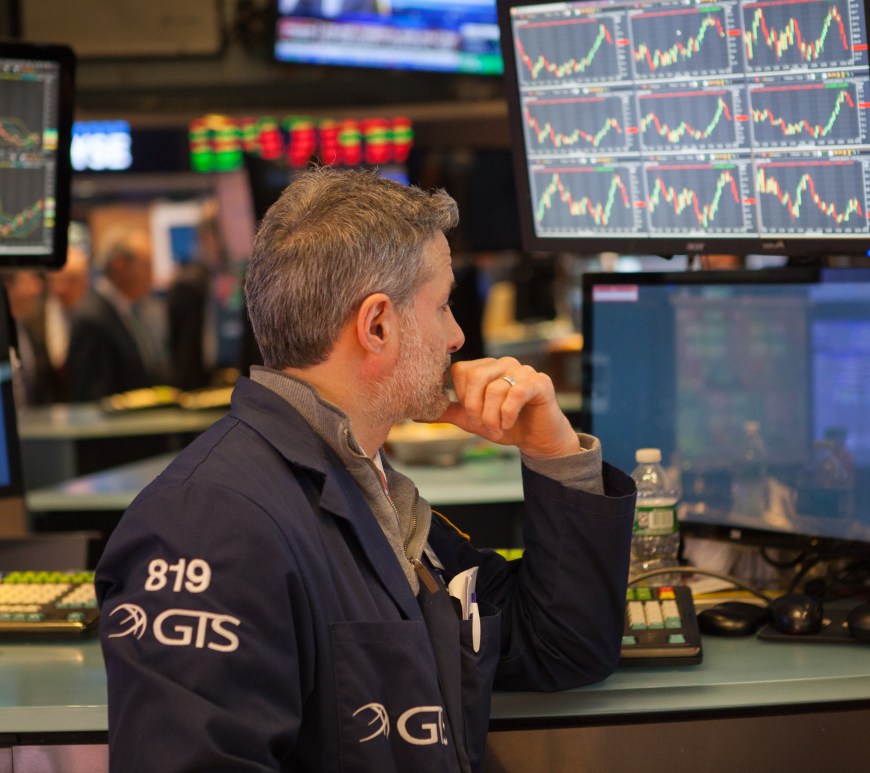
Stock broker watching screens

Psychological Trading

The human mind is not built for financial business. Our archicortex (the oldest region of the brain’s cerebral cortex) can’t distinguish between life-threatening and non life-threatening situations. This has effects throughout the financial sector, especially trading. Unfortunately, the perfect rationality of the “homo economicus” is a lie: humans have always been known to be affected by emotions and biases. Richard Thaler, a Nobel laureate in … Continue reading Psychological Trading

Factories puffing out smoke with powerlines overhead

The Cost of Climate Change

We are frequently subjected to news detailing the awful consequences of climate change if we don’t prevent it, from cities flooded by melting ice to animal species becoming extinct. Yet it is very rare to see anything about how much flooded cities would damage the economy, and it is even rarer to hear about how much climate change is costing us already. Aside from the … Continue reading The Cost of Climate Change

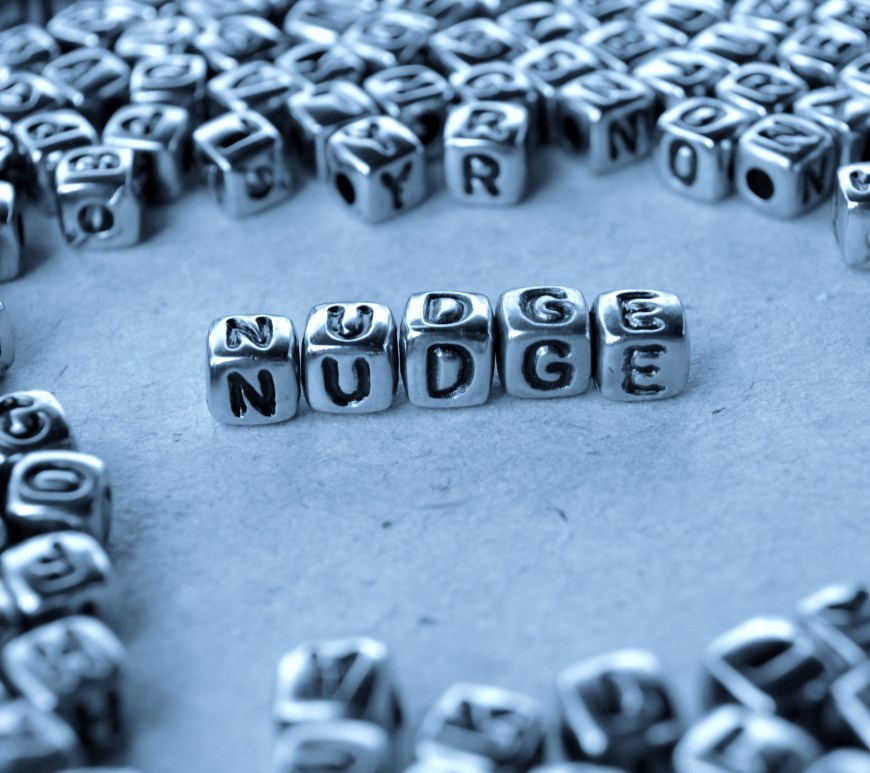
Nudge spelled out from dice with letters on

Nudges: Will they work forever?

As has been well-documented in academic research, people are by no means rational. In their book ‘Nudges’, Thaler and Sunstein famously describe two types of thinking: system 1 and system 2. The former is a more automatic method involving quick judgement calls which are more prone to irrationality, while the latter is much more deliberate, and less prone to external influences. From the moment we … Continue reading Nudges: Will they work forever?