Solution to the moral hazards of microfinance?

Microfinance is commonly regarded as the promise of innovative, cost-effective paths to poverty reduction and social change.  However, we are not living in a perfectly competitive credit market, so downsides such as moral hazard and asymmetric information that tend to create inefficiency make the program less effective, or even counterproductive in certain cases. So why don’t we ask people to help others and do the right … Continue reading Solution to the moral hazards of microfinance?

The UK is facing an energy crisis

North Sea oil supplies are running out. Peak oil extraction has been surpassed. The government’s policy of heavily subsidising renewable energy has cost the taxpayer billions and pushed household electricity bills up by £17 a year on average. The pressure to meet targets for carbon emission reductions has left the government forcing the closure of all coal power stations by 2025. Without a plausible reaction … Continue reading The UK is facing an energy crisis

“Poor Economics” by Duflo and Banerjee

Duflo and Banerjee’s Poor Economics is a developmental economics book which aims to change the way we think about alleviating poverty in developing countries, shifting our focus from the ‘big questions’ and ‘big policies’ towards evidence-based changes and nudges at the margin. It does this by clearly establishing the conditions in which the poor live and how they react to certain changes in their environment, … Continue reading “Poor Economics” by Duflo and Banerjee

Power lines at sunset

To burn or not to burn? Fuelling the future

The European Union has set the target for the energy consumption of all it’s member states to be 20% renewable by 2020. While currently Brexit is being negotiated, in 2015, the UK was given its own special target of 15% because of it’s its “low starting point”. The UK Great Britain has consistently lagged behind its European counterparts, ranking 24th out of 28 neighbouring states … Continue reading To burn or not to burn? Fuelling the future

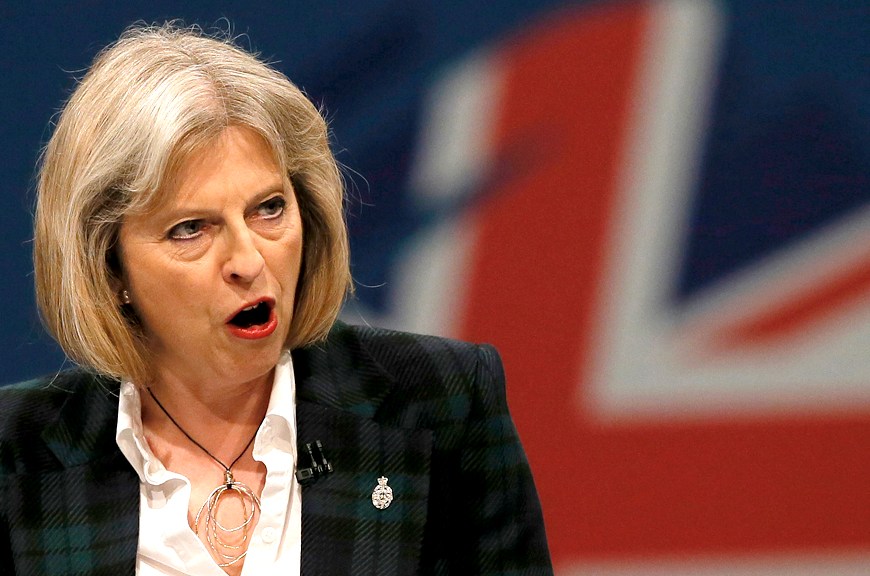
Theresa May’s problematic pledge to cap energy prices

The case for a cap on energy prices has arisen after the ‘big six’ energy companies raised prices by up to 15% earlier this year, even alongside low and falling wholesale prices. Although these have been justified by the energy companies as the result of being forced into generating renewable energy, it has not been perceived in that light by the general public, making the pledge … Continue reading Theresa May’s problematic pledge to cap energy prices

What is Rationality in Economics?

Rationality in economics is described to be a decision-making process of an economic agent that seeks to maximise utility. To best understand the notion of rationality in economics, it is best to compare it to rationality in a more psychological sense: the quality of being able to think sensibly or logically. This comparison highlights that rationality in economics is more concerned with the outcome of … Continue reading What is Rationality in Economics?

The US v. North Korea: The role of game theory

Tension between the United States and North Korea has reached a stage where missile strikes have become an alarming possibility. If tensions escalate further to a state where military action looks almost certain, game theory could offer us insight into finding the best strategy to tackle the problem. Firstly though, what does Kim Jong Un hope to achieve by possessing a nuclear arsenal? It is … Continue reading The US v. North Korea: The role of game theory

“What Money Can’t Buy” by Michael J. Sandel

Sandel makes it very clear in his book, What Money Can’t Buy, that he is a philosopher. You might expect Sandel, as the book is a meticulous analysis of the free market – an entirely economic concept – and its effects on society, to at least explore economic thought and reasoning, but he is scornful of it; he likes to distance himself from it throughout. … Continue reading “What Money Can’t Buy” by Michael J. Sandel