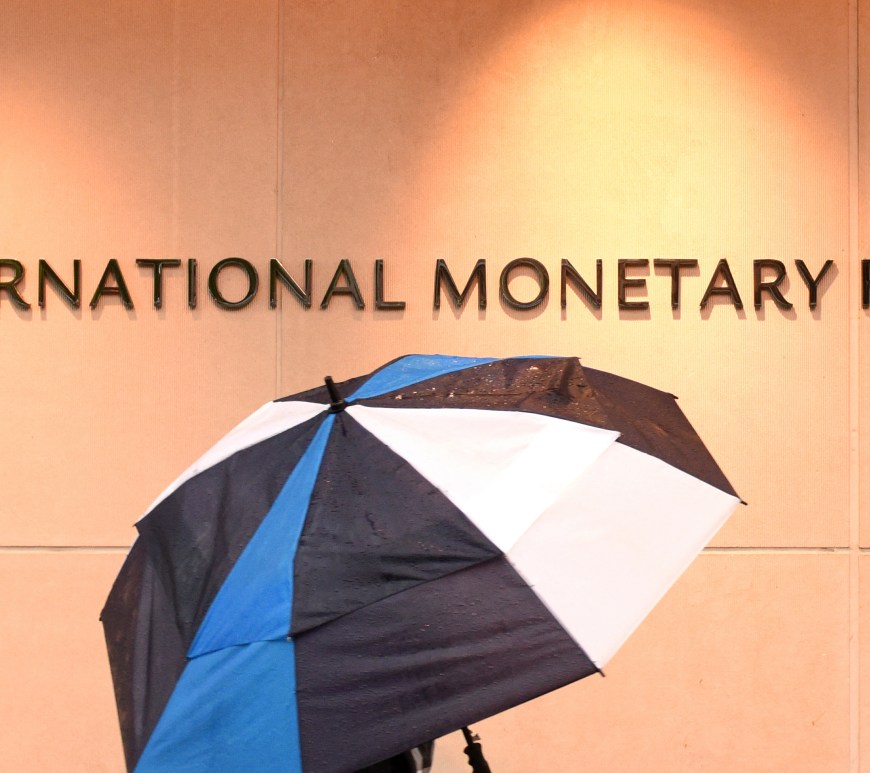
Man with Umbrella outside International Monetary Fund Building

IMF’s Identity

The 1940s saw a changing world, one haunted by the spectre of the Great Depression, one ravaged by the ongoing World War, and one marked by a lack of economic consensus or structure. The solution to these problems which 44 nations agreed on was the 1944 Bretton Woods Agreement, a multilateral attempt to establish economic rules for the new world. The agreement was created with … Continue reading IMF’s Identity

Natural Resources: The Never-Ending Supply

It is not because natural resources are finite that humanity will ever run out. Reverend Thomas Malthus’ warning in the latter parts of the 18th century on our planet’s inability to produce enough food to feed an ever-growing population has never materialised into a genuine concern. Nor has the US Bureau of Mines’ 1914 prediction that “The world will run out of oil in 10 … Continue reading Natural Resources: The Never-Ending Supply

Present under tree

Cash for Christmas? The economics of gift-giving

It’s December. You are frantically searching the aisles for those last-minute Christmas gifts. You don’t quite know what to get anyone, so you buy a few scented candles and some fluffy toys for the kids and call it a day. Will they fully appreciate your gifts? Statistically, probably not. According to a 1993 paper by economist Joel Waldfogel, a recipient generally values their gift 10-30% … Continue reading Cash for Christmas? The economics of gift-giving

An interview with Elliot Harris: UN Chief Economist

Elliot Harris is particularly notable for his studies on the African Continent, but is also more generally a very successful economist from who we all have a lot to learn as he presented his opinions on a number of issues facing the world today. What role do you think international institutions should be playing in guiding foreign and domestic policy, especially as the 21st century … Continue reading An interview with Elliot Harris: UN Chief Economist

WW2 bombers in sky

Why we’re Living in the Golden Age of Peace

War and violence. Topics that, until the pandemic, we seemed to have been hearing more and more about day by day. The Syrian Civil War drags on, the insane barbarity of ISIS continues, and the Israelis and Palestinians continue to slug it out. It seems that we’re living in an ever more vicious world. However, this is a distorted reality: the truth is that we … Continue reading Why we’re Living in the Golden Age of Peace

CDO spelt from a one dollar bill

CDOs: The genius idea that destroyed the World Economy

What are they? Collateralized debt obligations (CDO), initially created by the Drexel Burnham Lambert bank, are instruments which are formed by pooling together cash-generating assets such as mortgages, loans and other forms of debt. They are made up of various ‘tranches’ based on their respective level of credit risk. Supposedly, one diversifies their risk when buying a CDO as they have portions of high, medium … Continue reading CDOs: The genius idea that destroyed the World Economy

The Impact of COVID-19

The COVID-19 outbreak is having a severe impact on the global economy. China had its slowest year of economic growth last year off the back of the trade war with the United States. The timing of the virus could not have been worse, slowing China’s economy even further with their quarterly growth rate dropping to negative 6.8% from 6% in the previous quarter, seeing the … Continue reading The Impact of COVID-19

Large crowd of people

Overpopulation: Should we be worried?

Never before in human history have there been as many people alive as there are right now. The human population had been gradually increasing for the last couple of millennia, until there was an explosion in growth in the 19th century due to rapid medical and economic progress, brought about by the Scientific and Industrial Revolutions. As a result, the number of people has skyrocketed … Continue reading Overpopulation: Should we be worried?

When a Demographic Dividend Becomes a Demographic Nightmare

A demographic dividend refers to the positive impact anticipated for an economy’s productivity and growth due to the age structure of its population. A younger population is useful for the growth of economies as a larger working force population can translate to increased output as well as decreased dependency from senior citizens per worker. The age demographic influences consumption trends, productivity patterns, natural increases in … Continue reading When a Demographic Dividend Becomes a Demographic Nightmare