Foreign Aid: The Double-Edged Sword

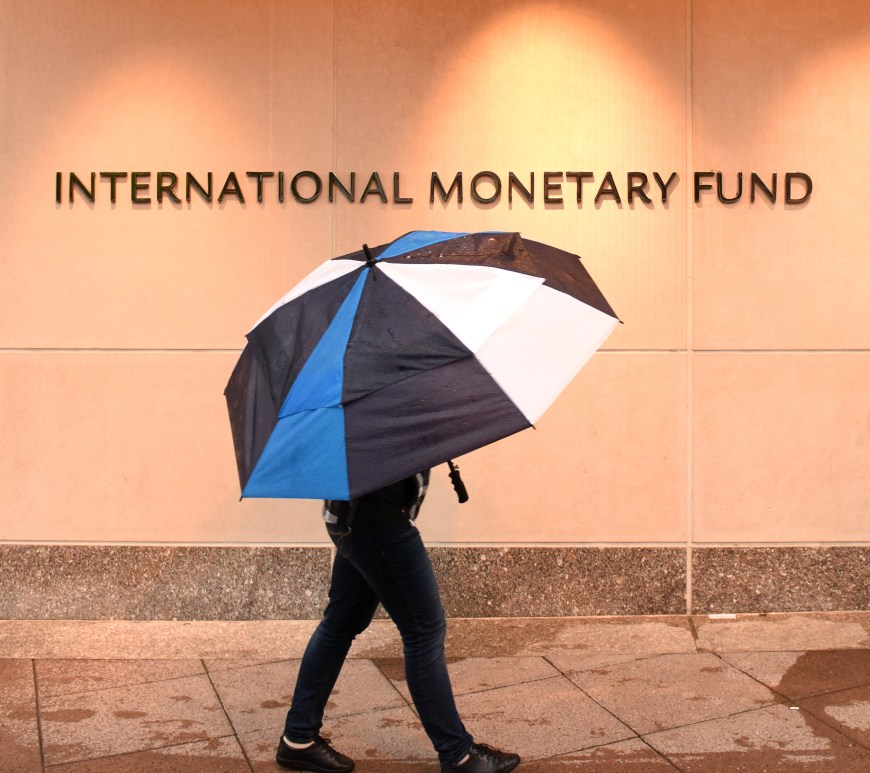
The coronavirus pandemic, dubbed the ‘Inequality Virus’, will push a further 150 million people globally into poverty by the end of 2021. The pandemic’s negative repercussions have been worst felt in low-income countries (LICs), where they have been described as ‘a serious setback to development progress’. Foreign aid has been at the forefront of supporting developing countries for many years, reaching ‘an all-time high of … Continue reading Foreign Aid: The Double-Edged Sword


Prospect Theory

How happy would you be if I said you won £1,000? Presumably rather elated; but would you be twice as happy if I’d instead told you that you’d won £2,000? To most people the answer is almost immediate: “Well I’d be happier but probably not twice as much!” Likewise, most people would choose a guaranteed £1,000 prize rather than a 50% chance of a £2,001 … Continue reading Prospect Theory

Financing Think Tanks

Think tanks are defined by the Oxford English Dictionary as “a research institute or other organization providing advice and ideas on national or commercial problems.” In modern democracies, think tanks play a crucial role in economic decision-making. They help the public to understand both sides of important policy decisions whilst holding governments to account. They also help policymakers: governmental entities, such as the Low Pay … Continue reading Financing Think Tanks

Dr Jianhai Lin: “The Changing Global Economic Landscape: Challenges and Opportunities”

The Keynes Society was honoured to host Dr Jianhai Lin virtually. Dr Lin joined the IMF in 1989 and, from March 2012 to August 2020, was the Secretary of the International Monetary Fund, its Board of Governors and the International Monetary and Financial Committee. He had previously served in senior positions in the IMF’s Finance, Policy Development and Review, and Asian and Pacific Departments, working … Continue reading Dr Jianhai Lin: “The Changing Global Economic Landscape: Challenges and Opportunities”

The Data Revolution: The Rise of a New Economy

The rapid increase in global data production that is currently taking the world by storm is by no means a recent phenomenon. Indeed, ever since the very earliest stages of mankind’s existence, data in some form has been the metric used to evaluate almost everything, from decisions regarding the implementation of new technologies to deciding on the most suitable design for a product. It is … Continue reading The Data Revolution: The Rise of a New Economy

Does Government Spending Benefit the Economy?

‘Spend as much as you can’, urged the IMF at the start of 2021 in order to accelerate the global economy’s revival. Others argue that the economy should be left to its own devices – government intervention only creates havoc. Governments spend in a plethora of ways, but we must examine the effects of government spending, originally intended to directly benefit the economy. On the … Continue reading Does Government Spending Benefit the Economy?

Dan Ariely – Modern Behavioural Economics

Behavioural economics has taken the world by storm, aided by catchy and digestible books and superstar researchers. One of the most prominent contemporary figures in the field is Daniel Ariely, the current James B. Duke Professor of psychology and behavioural economics at Duke University. He has authored multiple best-selling books on his research, most famously his ‘irrational trilogy’ of Predictably Irrational, The Upside of Irrationality, and The Honest … Continue reading Dan Ariely – Modern Behavioural Economics

Forever blowing bubbles

Be fearful when others are greedy and greedy when others are fearful. – Warren Buffett Buffett uses this mantra every day, along with his two other ground rules for running his investment firm Berkshire Hathaway: Never lose money. Never forget rule number 1. So why does the 90-year-old legendary investor hold these core mantras? One possible answer can be found by considering the history of … Continue reading Forever blowing bubbles

Price Controls on Essentials During the Pandemic

The phrase “time of crisis and shortage” is certainly applicable to the coronavirus pandemic; it refers to a period of difficulty where specific items cannot be obtained in sufficient amounts due to shortages in quantity supplied. This may encourage societal inequalities.  For example, in order to prevent a future lack of essential goods, higher income earners are better placed to “hoard” such goods, as the … Continue reading Price Controls on Essentials During the Pandemic

Interstellar Economics

In 1978 Dr Paul Krugman wrote a paper entitled The Theory of Interstellar Trade, supposedly to cheer himself up. Yet despite the self-described “silly” nature of the work, it contained serious analysis, and since being written has inspired several more works on the economic implications of interstellar travel. The chief issue that economists have grappled with is that of time dilation. In short, Einstein’s theory … Continue reading Interstellar Economics