
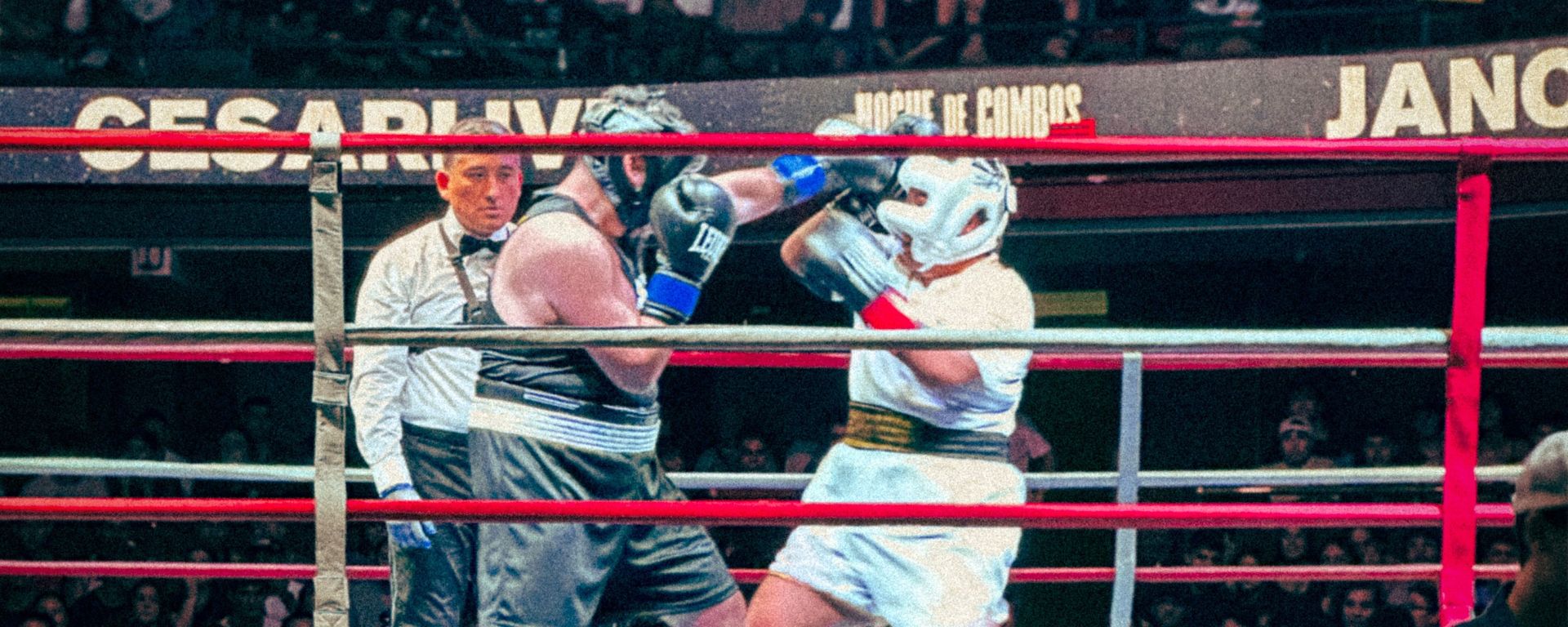
When you think of boxing today, the focus is not necessarily on the best in the world, but on those with the greatest number of followers. The difference is clear: Logan Paul vs. KSI 2 on November 9, 2019, sold 2 million pay-per-views. On the other hand, Oleksandr Usyk vs. Tyson Fury 1 (which was for the WBA, WBO, WBC, and IBF world titles) sold 1.5 million pay-per-views in comparison. Clearly, it was not the level of competition that made the event between Logan Paul and KSI so popular. So, what was the economic side of it that made the event so successful?
For KSI vs. Logan Paul, each fighter earned a minimum of $900,000 alongside performance bonuses from pay-per-views.
The Product of Influencer Boxing
One may be quick to believe that influencer boxing is simply a form of boxing with a specific type of fighter, but this would be incorrect. The selling point, unlike traditional boxing, is more about who is fighting and relies heavily on a storyline. Those involved attempt to build an active storyline between themselves in order to cash in on the finale using the attention they have built. Within each famous fight, a storyline is attached:
- Jake Paul and Mike Tyson’s purses were around $60–80 million, emphasizing the “influencer vs. living legend” storyline, as some believed Mike Tyson still possessed the power to knock out his opponent.
- KSI vs. Logan Paul emphasized their online “beef” involving diss tracks from both sides, which generated up to $30 million (although the exact revenue is unknown).
This product is what makes influencer boxing so competitive against professional boxing: it emotionally commits viewers to a storyline that they must see to the end.
Pricing and Distribution
Influencer boxing also departs from traditional boxing when it comes to pricing and distribution. Although it features pay-per-views that rely on a very loyal audience willing to pay a premium price, influencer boxing often tends to utilize subscription platforms to distribute fights at a lower consumer price for a larger audience. In the US, these fights are increasingly becoming more common on Netflix and DAZN. Subscription platforms have realized that capturing sign-ups through attractive fights is a method of gaining subscribers with large upside potential. For the Mike Tyson vs. Jake Paul fight alone, a record-breaking 1.43 million individuals signed up for Netflix—which exclusively streamed the fight—in the three days leading up to the event.
Value Capture
So, if influencer boxing makes millions a year, who gets the money? This can be split into platforms, event organizers, and fighters.
- Platforms such as Netflix and DAZN make profits from new subscribers who are drawn to events, as stated previously.
- Promoters such as MVP (co-founded by Jake Paul) or Misfits (co-founded by KSI) also stand as winners for each fight. They own the rights to media, ticketing, and sponsorships, which allows them to stay profitable in the long run. Media rights tend to be the biggest proportion of income, as platforms like Netflix can pay a lump sum of $60 million for fights as large as Jake Paul vs. Mike Tyson. Misfits Boxing is now worth over £100 million.
- Influencer fighters gain significant amounts of money from each event, which is in some cases bigger than the actual payout they get from being an influencer. In the biggest fights, fighters can earn up to 60% of the revenue brought in by the event. As such, individuals like KSI are believed to have earned £10 million for fighting Tommy Fury (the half-brother of Tyson Fury), while Logan Paul was believed to have earned an even bigger payout of $20 million from his fight with Floyd Mayweather. This is a significant advantage of the influencer boxing market in comparison to other fighting businesses like the UFC, as fighters are attracted to the “fairer” compensation system (the UFC only pays around 17% of its revenue to its fighters). This has led to a strong influx of ex-UFC fighters toward influencer boxing, with five previous champions having been involved so far. It must also be noted that influencers can gain a greater following post-fight depending on their performance, expanding their future pay. For example, after his fight with Nate Diaz, Jake Paul gained over 760,000 followers within a month.
How money flows within the influencer boxing market
Limitations of Influencer Boxing
The distribution channel of subscription-based services can become a major limitation for influencer boxing. Specifically, traditional pay-per-views allow for an uncomplicated calculation of revenue, as most of the earnings (except ticket sales for the live audience in the stadium) can be estimated by multiplying pay-per-view sales by the pay-per-view price. Conversely, an informational asymmetry is created in influencer boxing due to its reliance on subscription platforms that are able to gatekeep viewer counts. This leads to influencers losing their bargaining power, resulting in contracts that may reward one party inequitably.
Furthermore, some boxers and boxing fans criticize influencer boxing as a money-grab rather than an event focused on true boxing. Robert Smith from the British Boxing Board of Control believes that poor standards will eventually lead to danger, warning that novice fighters are competing under professional rules without adequate training. At the same time, some criticize the potentially exploitative nature of influencer boxing, especially regarding retired fighters. Mike Tyson, in his bout with Jake Paul, was 58; Nate Diaz and Tyron Woodley, both retired UFC fighters who also fought Jake Paul, were 38 and 40 respectively in their boxing fights, raising concerns for their long-term health.
While critics have condemned the sport, it cannot be denied that influencer boxing is a growing trend within the sporting world that continues to set records. Its growing popularity is a testament to the shifting nature of sports and consumer tastes: audiences increasingly value personalities, storylines, and shareable experiences over pure technical quality.

