





The Bitcoin Bubble
In 2008 the first cryptocurrency Bitcoin was launched. While still providing a means for exchanges and the store of value, cryptocurrencies have the distinct advantage of being decentralised as opposed to the more typical fiat currencies (e.g. the US Dollar) which rely on banks and governments to declare it legal tender and maintain its value. However, Bitcoin has the advantage of cutting out the ‘middle-man’ … Continue reading The Bitcoin Bubble

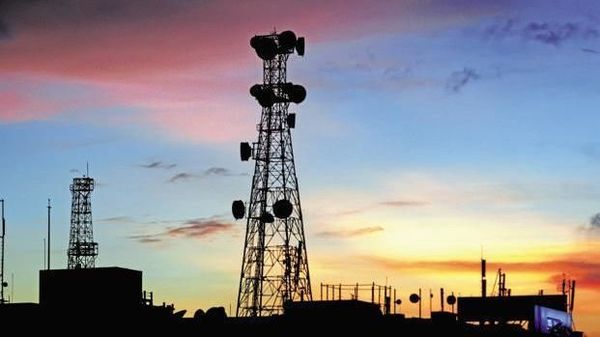
Indian Telecom Revolution
Mobile data has become ubiquitous with cellular packages, and its usage is likely to increase further. Access to mobile data is essential for consumers due to the unreliability and privacy concerns of public Wi-Fi networks and long commuter hours spent around the globe. However, even with increasing demand, data prices in India (which houses the world’s second highest number of mobile users) have been drastically … Continue reading Indian Telecom Revolution


What’s the big deal about Huawei?
Forgot Johnson and Johnson’s, or Wells Fargo, Huawei has been the most notorious and controversial company of at least the last few years. Boris Johnson’s decision on 28 January to allow Huawei, a Chinese telecoms giant, to build 35% of Britain’s 5G infrastructure caused uproar, both domestically and internationally. Senior Tories, including Ian Duncan Smith and David Davis, wrote a letter criticising the decision, while … Continue reading What’s the big deal about Huawei?


China in Africa
At the turn of the century, China started to boost its outward direct investment (ODI). This change in policy constituted one of the most dramatic shifts in economic history; China shot up in the global ODI rankings, moving from 23rd to 2nd in a matter of 15 years. In particular, China has boosted its investment into Africa and in 2009, it overtook the US as … Continue reading China in Africa


Is it Too Late for Europe to Solve its Population Problem?
For a country to sustain its population the fertility rate must be at least 2.1. That is to say, each female member of the population must have on average 2.1 children. Today the European Union’s rate sits at only 1.6, with the highest fertility rate being in France at 1.9. Together with rising life expectancy, these statistics help explain Europe’s most pressing issue: an ageing … Continue reading Is it Too Late for Europe to Solve its Population Problem?


Why IP Laws Should Be Weakened
Intellectual property (IP) laws have gathered a lot of press recently, specifically in relation to the cost of drugs and healthcare, as well as the US-China trade war. There is much debate over their purpose and success. This article will explore what IP laws are, what they aim to achieve, how they might be failing and how they can be improved. IP rights are a … Continue reading Why IP Laws Should Be Weakened

Space Tourism: Ready for Lift-off?
When most people think of space, they picture an inaccessible vastness that stretches further than they can fully comprehend. They think of Neil Armstrong, the International Space Station and NASA; or Soyuz and Yuri Gagarin. What could unite our perception of space though, is that it is primarily the domain of nation states, not individuals or companies. That may be about to change. In the … Continue reading Space Tourism: Ready for Lift-off?

Should Big Tech Be Broken Up?
The Big Four. GAFA – Google, Amazon, Facebook and Apple. These are the four companies that make up Big Tech. They have been dominating the technology industry, and you would be hard-pressed to find someone who hadn’t heard of every one of them. They have a combined worth of nearly $3.5 trillion, and the gap between them and mainstream media is widening. At the end … Continue reading Should Big Tech Be Broken Up?


Consequences of the Coronavirus
For the people of China and neighbouring regions, the end of January each year typically has a special place in their hearts, for Lunar New Year beckons. Yet this year, which has already been tainted by many a tragedy (such as Iran’s shooting down of a Ukrainian passenger plane), the dawn of February sees Asia captivated in a much scarier circumstance. Coronavirus, deriving from a … Continue reading Consequences of the Coronavirus


Negative Nominal Interest Rates
Central banks in developed economies face a strange monetary reality. Since the Global Financial Crisis, much of what economists thought they understood about inflation and economic growth no longer applies. The apparent link between low unemployment and inflation seems to have disappeared and the prolonged low interest rates of the past 12 years have been futile in promoting inflation. This unprecedented situation has resulted in … Continue reading Negative Nominal Interest Rates


