

Whether you live in America or not, you have likely heard of the astronomical fees that the US healthcare system currently charges its users. In fact, the issue has gotten to a point where 23% of individuals who have required immediate healthcare refuse to call emergency services to avoid being charged for the $3500 it would cost to call advanced care without insurance. What has made this problem so serious? And is there a way to solve this issue?
A single doctor visit in the US can cost $600 in some cases

The causes of the issues of the US healthcare system
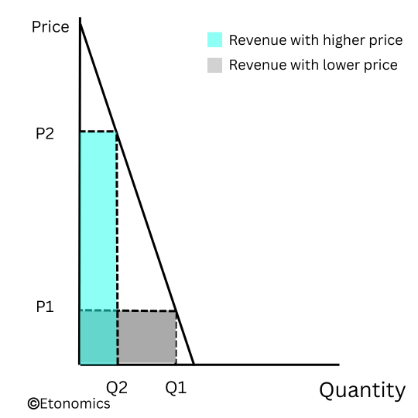
So, what has caused the US healthcare system to become so flawed? To understand the first cause of the issue, one must first understand the impact of WW2 on American society. During the war, the US government created wage controls to prevent inflation as countries were often hit by it during the war due to necessary government spending and the increase of the money supply (in order to pay for the war). This meant that for employers, one of the only ways they could become more attractive in comparison to their peers was through providing benefits such as healthcare. This created the first issue: for the some of those employed, healthcare comes at a small price. This becomes problematic when considering the fact that demand for healthcare is already price inelastic (change in quantity demanded < change in price) due to its necessity, and therefore if healthcare is made even more price inelastic due to some consumers not taking the burden of paying for it, firms are incentivized to increase prices to maintain profits.
When demand is relatively inelastic, raising prices increases revenue.
Furthermore, the high prices within US healthcare are also caused by the strong bargaining power of the providers of healthcare. The hospital market already has a high barrier to entry, reducing competition and alternatives that could increase consumer’s bargaining power. However, more importantly, unlike the NHS in the UK, American healthcare facilities can group together legally to create leverage. This leverage is often used against both consumers and insurers to increase prices, as consumers are unable to switch to alternative facilities if said facilities are already collaborating to create higher prices, and insurers are unable to force hospitals to lower prices if a group of hospitals threaten to not use their insurance (as it would mean those insured by the insurance company will no longer be able to use the hospital).
Attempts to fix the US healthcare system
So, what has been done in order to ameliorate this problem? In 2010, the Obama administration was able to pass the Affordable Care Act (ACA), aimed at lowering insurance prices for all those with healthcare needs. It is often referred to as a “three-legged stool” due to containing three policies within the Act :
1) Insurers must not be discriminatory when giving insurance policies; this lowered insurance prices for those with health conditions.
2) Every individual must purchase health insurance-this would prevent the healthy avoiding insurance (which had made the insurance claimant count lower), reducing cost for insurers and lowering prices.
3) The government would subsidize insurance policies (lowering consumer prices).
However, despite the popularity of policy numbers 1 and 3, the condition that every individual must own health insurance was detrimental to the success of the policy. By 2017, due to the Tax Cuts and Jobs Act, the penalties for not purchasing health insurance was literally reduced to $0, reducing the effectiveness of the Act. While the ACA subsidies do continue, some argue that continued subsidization will lead to an unsustainable burden on the fiscal position, as the ACA subsidies have cost $105.7 billion in 2025 alone.
More recently, on January 1st 2022, the No Surprises Act (NSA) came into effect. It reduces the likelihood of surprise charges from emergency services supplied by providers not covered by one’s insurance; it also prevents out-of-network doctors such as Radiologists and air ambulances from charging customers extra. However if any of these above do occur, the law sets up an open period of negotiation between insurers and service providers so that service providers are not left unpaid for; A federal Independent Dispute Resolution occurs to determine who will pay for these services if the open negotiations fail. The No Surprise Act has been successful in reducing bills that were previously called unjust, as studies from the BMJ (British Medical Journal) state that there were “substantial declines” in bills that were known to be unfair. However, The NSA has been criticized by some due to the high bureaucratic costs of the Independent Dispute Resolution ($5b in 2022-2024) , and how it has also been known to create backlogs due to slow decision making.
The flaws of the US healthcare system do not stem from a lack of funding or medical innovation; rather, the flaws are formed by deep structural issues that are difficult to overcome. While new laws such as the Affordable Care Act and preexisting systems such as Medicare do attempt to make US healthcare more accessible, these fixes have been temporary and focused on the symptoms of the flaws rather than the deep issues themselves. Meaningful reform is difficult: nationalization of the healthcare system similar to that of the NHS may worsen the US fiscal position significantly, while stricter governmental control may only be met with political pushback. Thus, attempts to improve affordability must navigate a system with powerful providers, insurance markets, and political constraints.

