Indian men watching a bonfire on the street

Reaping What the Farm Bills Sow: Has Modi met his match?

According to the IMF, India has the 5th biggest economy in the world, behind the US, China, Japan and Germany. Leading its economic charge is Narendra Modi, India’s Prime Minister, a polarising Hindu nationalist running a country encompassing a multitude of faiths, languages and cultures. Modi has a reputation for immediate action, for example in 2016 he gave four hours’ notice to invalidate high value … Continue reading Reaping What the Farm Bills Sow: Has Modi met his match?

50 euro bills being minted

Should the EU Abandon the Euro?

On January 1st 1999, the EU unveiled their new currency to the world: the euro. A currency that was supposed to promote economic growth, stability and integration, it has now become the scapegoat of the EU’s failures. Amid growing Euroscepticism and division by way of the pandemic, has a currency that was supposed to sow unity between European nations actually caused tragedy? Originally, the euro … Continue reading Should the EU Abandon the Euro?

Natural Resources: The Never-Ending Supply

It is not because natural resources are finite that humanity will ever run out. Reverend Thomas Malthus’ warning in the latter parts of the 18th century on our planet’s inability to produce enough food to feed an ever-growing population has never materialised into a genuine concern. Nor has the US Bureau of Mines’ 1914 prediction that “The world will run out of oil in 10 … Continue reading Natural Resources: The Never-Ending Supply

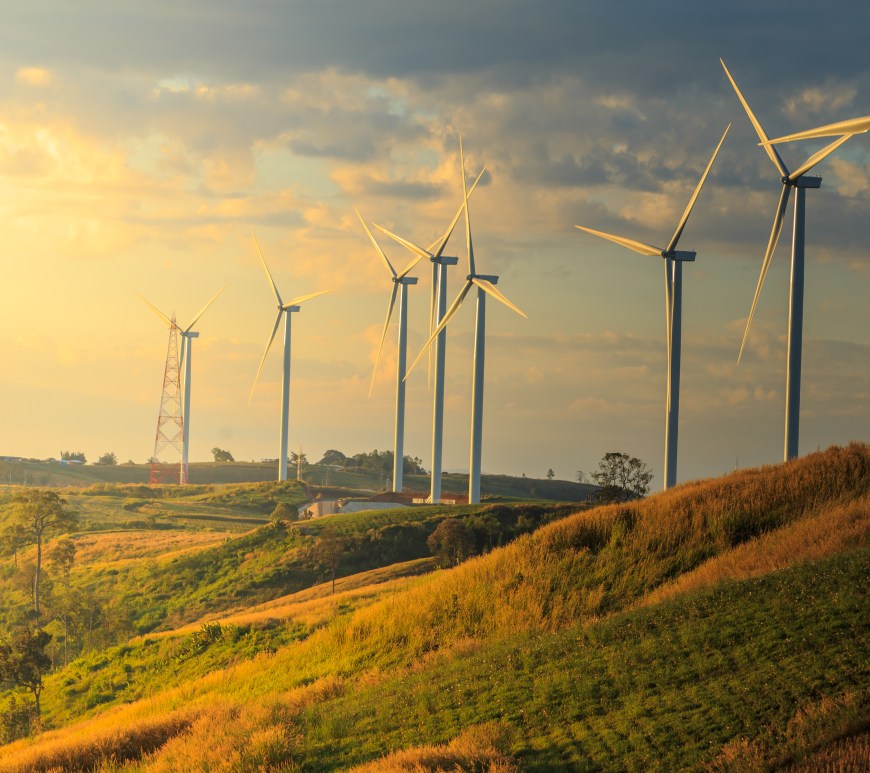
Wind farm

Renewable Energy: Britain’s way back?

Britain’s economy has been the worst hit of all of the OECD economies (major developed economies) both before and during the lockdown period. Whilst other countries’ economies are now starting to recover, Britain is still in intensive care. There are a number of reasons for this situation. Firstly, a decade of austerity led to cuts in public spending which eroded public-sector infrastructure and good will. … Continue reading Renewable Energy: Britain’s way back?

An interview with Bob Massie: Global warming, economic growth and the future of capitalism

Bob Massie has been working on business, finance, governance, and sustainability for more than thirty years. Massie has served as the executive director of Ceres, a powerful coalition of institutional investors and environmental and public interest groups in the United States.  In 1997 he proposed the creation of generally accepted guidelines for corporate sustainability performance. In 2002 he conceived of the first Institutional Investor Summit … Continue reading An interview with Bob Massie: Global warming, economic growth and the future of capitalism

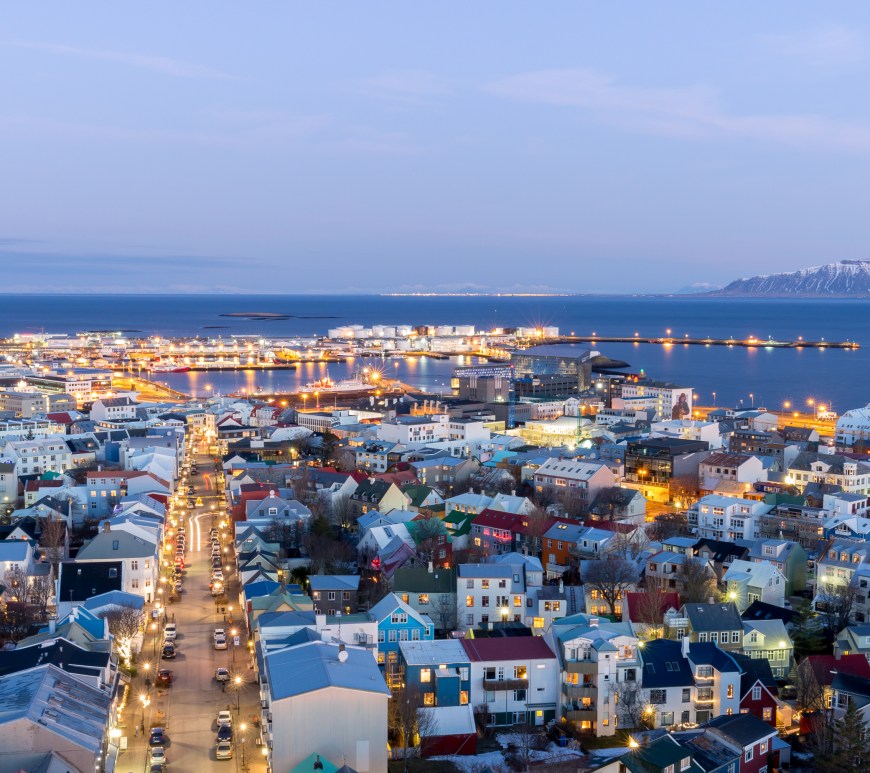
Unregulated and Unchallenged: Iceland’s Banking Saga

In the midst of a global public health emergency, Iceland has fared exceptionally well amongst Western nations, with only 1,804 reported cases and 10 deaths. Twelve years ago, however, the story was very different; Iceland was facing collapse as a result of a Wall Street contagion, another pandemic that would expose the fundamental weaknesses of deregulated financial systems. Within a week, the entire banking sector … Continue reading Unregulated and Unchallenged: Iceland’s Banking Saga

Burger being 3D printed in a shopping mall

3D-printed Food

On the 1st April 2016, the Guardian newspaper published an April Fool’s article describing the Foodini – “the first 3D-food printer to print all types of real, fresh, nutritious foods”. Many people smirked actually tempted to buy. But it wasn’t a joke. 3D food printing is no sci-fi experiment or Wallace & Gromit invention. Today 3D food printers actually exist and are coming to your … Continue reading 3D-printed Food

The Rationality of Irrationality

Reinhard Selten, 1994 Nobel prize and founding father of experimental economics, predicted that individuals wouldn’t play the conventional Nash Equilibrium in the Ultimatum Game, better known as a take-it-or-leave-it offer. This was proven to be accurate when his student Werner Güth showed this supposedly irrational behaviour in his 1982 experiments. In game theory a Nash Equilibrium is a scenario where neither player would benefit from … Continue reading The Rationality of Irrationality

The Covid-19 Crisis: Emerging Markets Hang in the Balance

“All countries need to work together to protect people and limit the economic damage. This is a moment for solidarity.” Kristalina Georgieva Managing Director and Chairwoman of the IMF The COVID-19 crisis has already left some of the world’s most advanced economies in dire straits. News outlets have been quick to cover the stringent lockdowns and plummeting markets of the developed world. However, media coverage … Continue reading The Covid-19 Crisis: Emerging Markets Hang in the Balance

Rent-seeking and Inequality

26 billionaires own as much as the world’s poorest 3.8 billion people – perhaps unsurprising given how little the poor in developing countries own. Inequality is widely accepted as not only inevitable but desirable to an extent, to incentivise innovation and productivity, but in OECD countries it is at the highest level for the past half century. Those at the top of the income and … Continue reading Rent-seeking and Inequality